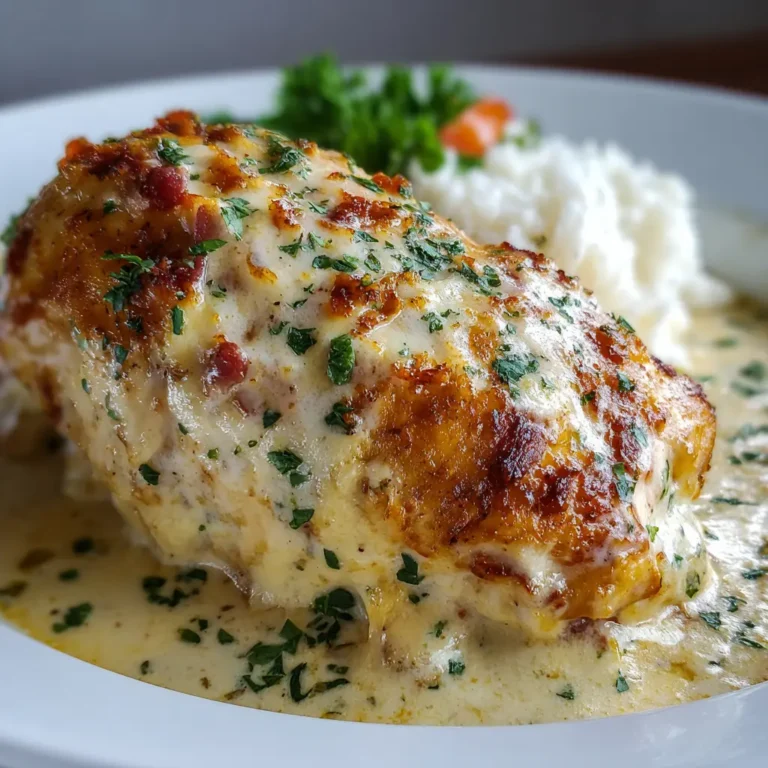
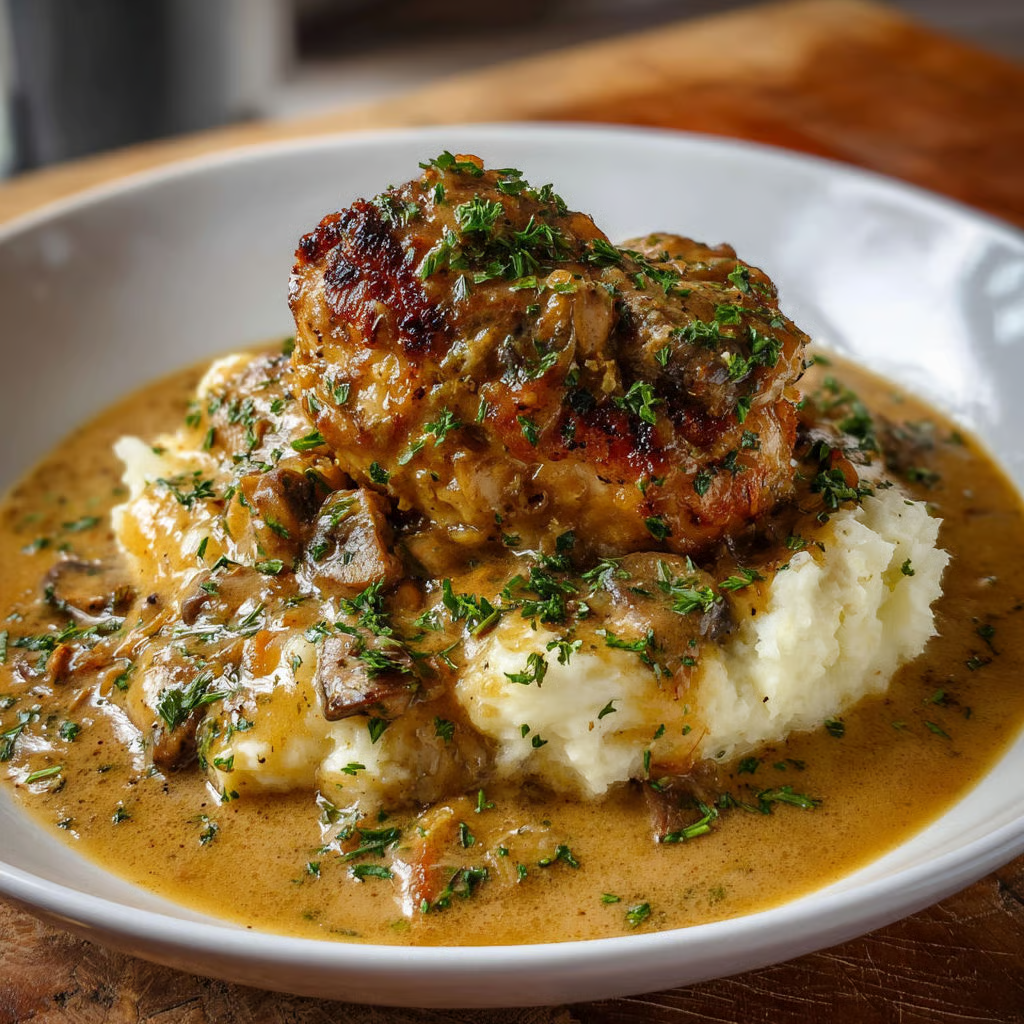
Smothered chicken thighs combine the satisfaction of crispy, well-seasoned poultry with a luxuriously rich onion gravy that transforms an everyday ingredient into restaurant-quality comfort food. This technique involves searing bone-in, skin-on chicken thighs to golden perfection before braising them in a savory gravy enriched with aromatics, chicken stock, and cream. The result is tender, fall-off-the-bone chicken enveloped in a velvety sauce that begs to be served over fluffy mashed potatoes or creamy grits.
Why You’ll Love This Recipe
- Restaurant-Quality Results at Home – The combination of proper searing technique and oven braising creates chicken that’s crispy on the outside yet impossibly tender inside, rivaling any Southern comfort food establishment.
- Deeply Layered Flavors – Multiple seasoning applications and the development of a proper roux create complex, savory depth that goes far beyond basic chicken and gravy.
- Impressive Yet Approachable – While the finished dish looks and tastes sophisticated, the straightforward technique makes it accessible even for intermediate home cooks building their confidence.
- Built-In Sauce Perfection – The gravy develops naturally in the same pan where you sear the chicken, capturing all those flavorful browned bits and eliminating the need for separate sauce preparation.
- Flexible Serving Options – This versatile main course pairs beautifully with everything from mashed potatoes and rice to pasta, polenta, or crusty bread for soaking up every drop of gravy.
- Ideal for Gatherings – The recipe scales easily and can be partially prepared ahead, making it perfect for Sunday dinners, potlucks, or any occasion requiring crowd-pleasing comfort food.
Ingredients You’ll Need
Chicken
- 4 to 5 bone-in, skin-on chicken thighs – The bone and skin contribute essential flavor and help the meat stay moist during cooking while creating a beautiful crispy exterior when properly seared.
Seasonings
- 2 teaspoons Lawry’s seasoning salt, plus 1 tablespoon divided – Provides a savory, well-balanced base seasoning that contains salt, sugar, and spices for comprehensive flavor development.
- 2 tablespoons garlic powder, divided – Delivers concentrated garlic flavor throughout both the chicken coating and the gravy without the risk of burning fresh garlic during searing.
- 2 tablespoons paprika, divided – Adds warm color, subtle sweetness, and mild pepper notes that complement the savory elements.
- 1 Sazon seasoning packet – Contributes a distinctive Latin flavor profile with coriander, cumin, and annatto for color and depth.
- 2 teaspoons cracked black pepper – Provides sharp, aromatic heat with more texture than finely ground pepper.
- 1/4 teaspoon crushed red pepper flakes – Adds a subtle background heat that enhances rather than overwhelms the other flavors.
- Dried parsley, for garnish – Offers visual appeal and a hint of herbaceous freshness to the finished dish.
Flour Mixture and Pan Components
- Approximately 240 grams (2 cups) all-purpose flour – Creates a protective coating that crisps during searing and later thickens the gravy when incorporated into the roux.
- 30 milliliters (2 tablespoons) avocado oil or vegetable oil – High smoke point oils are essential for achieving proper browning without burning during the high-heat searing process.
- 28 grams (2 tablespoons) unsalted butter – Adds richness to the gravy and helps build the roux foundation with nutty, complex flavor.
Aromatics and Liquids
- 1/2 large white onion, sliced – Provides sweet, savory depth that mellows during cooking and creates textural interest in the finished gravy.
- 7 to 8 garlic cloves, finely chopped – Fresh garlic sautéed in the roux develops sweet, mellow flavor that’s essential to the gravy’s aromatic quality.
- 600 milliliters (2 1/2 cups) chicken stock – Forms the liquid base of the gravy while reinforcing the chicken flavor throughout the dish.
- 120 milliliters (1/2 cup) heavy cream – Creates a silky, luxurious texture and adds richness that balances the savory and slightly spicy elements.
Step-by-Step Instructions
Prepare and Season the Chicken Pat the chicken thighs completely dry with paper towels and allow them to come to room temperature for about 20 minutes. Season both sides generously with 2 teaspoons Lawry’s seasoning salt, 1 tablespoon garlic powder, 1 tablespoon paprika, and 1 Sazon packet, rubbing the mixture firmly into the skin and meat to ensure proper adhesion and flavor penetration.
Create the Seasoned Flour Mixture In a shallow bowl or plate, whisk together the all-purpose flour with 1 tablespoon Lawry’s seasoning salt, 1 tablespoon garlic powder, 1 tablespoon paprika, and 2 teaspoons cracked black pepper until the seasonings are evenly distributed throughout the flour. This seasoned coating will create a flavorful crust and later serve as the thickening agent for your gravy.
Coat the Chicken Thoroughly Dredge each seasoned chicken thigh in the prepared flour mixture, pressing gently to ensure complete coverage on all surfaces including the underside and edges. Shake off any loose excess flour but maintain a visible, even coating, then set the coated thighs on a clean plate and reserve the remaining seasoned flour for building the roux later.
Sear the Chicken to Golden Perfection Heat the oil in a large oven-safe pan or Dutch oven over medium-high heat until shimmering but not smoking. Carefully place the chicken thighs skin-side down in the hot oil and cook undisturbed for 5 minutes until deeply golden and crispy, then flip and cook an additional 5 minutes on the second side. Remove the browned chicken to a plate and set aside—it will finish cooking later in the oven.
Build the Roux Foundation Carefully pour off excess oil from the pan, leaving approximately 2 tablespoons of fat and all the flavorful browned bits stuck to the bottom. Add the butter and allow it to melt, then add the sliced onion, chopped garlic, crushed red pepper flakes, cracked black pepper, and 4 tablespoons of the reserved seasoned flour. Whisk continuously for 3 to 5 minutes while the vegetables soften and the flour toasts to a light golden color, creating the roux that will thicken and flavor your gravy.
Create the Rich Gravy Gradually pour in the chicken stock while whisking constantly to prevent lumps from forming in the roux. Continue whisking and allow the mixture to simmer for 3 to 5 minutes until it begins to thicken noticeably, then stream in the heavy cream while stirring, creating a smooth, velvety gravy with a beautiful light tan color.
Nestle the Chicken into the Gravy Return the seared chicken thighs to the pan along with any accumulated juices from the resting plate, arranging them skin-side up and nestling them into the gravy so they’re partially submerged. Spoon some of the gravy over the exposed surfaces to keep everything moist and flavorful during the braising process.
Braise in the Oven Bring the entire pan to a full boil on the stovetop to jumpstart the cooking process, then cover tightly with a lid or aluminum foil and transfer to a preheated 200°C (400°F) oven. Bake for 45 minutes, during which time the chicken will become incredibly tender while the flavors meld and intensify in the covered environment.
Finish and Serve Remove the pan from the oven and carefully uncover, allowing steam to escape away from you. Spoon the thickened, aromatic gravy generously over each chicken thigh, then garnish with a light sprinkle of dried parsley for color and freshness. Serve immediately alongside freshly prepared mashed potatoes, rice, or your preferred starchy side to soak up every bit of the luxurious gravy.
Recipe Notes & Tips
- Proper Browning is Essential – Don’t rush the searing step or crowd the pan; well-browned chicken creates fond (the flavorful browned bits stuck to the pan) that becomes the foundation of exceptional gravy depth and color.
- Room Temperature Chicken Cooks Evenly – Allowing chicken to sit at room temperature for 15-20 minutes before cooking ensures the meat cooks uniformly from edge to center, preventing dried-out exteriors and undercooked interiors.
- Roux Color Affects Flavor – Cooking the flour and butter mixture to a light golden color develops nutty notes, but don’t let it get too dark or it will taste bitter and won’t thicken the gravy properly.
- Gradual Liquid Addition Prevents Lumps – When incorporating the chicken stock into the roux, add it slowly while whisking vigorously to create a smooth gravy without any flour clumps that can ruin the texture.
- Don’t Skip the Stovetop Boil – Bringing the pan to a boil before transferring to the oven ensures the cooking process starts immediately and helps the gravy thicken properly during the covered baking time.
- Resting Time Matters – Allow the finished dish to rest for 5 minutes after removing from the oven so the gravy thickens slightly and the chicken reabsorbs some of the moisture, making it even more tender and flavorful.
Nutritional Information
Prep Time: 10 minutes
Cook Time: 60 minutes
Total Time: 70 minutes
Servings: 4 servings (4 to 5 chicken thighs)
Calories: Approximately 567 calories per serving (estimation based on standard ingredient calculations; actual values may vary based on specific brands and portion sizes)
Perfect Pairings
- Classic Mashed Potatoes – Creamy, buttery mashed potatoes are the traditional accompaniment, providing the perfect vehicle for soaking up the rich, savory gravy while adding comforting starch to balance the protein.
- Fluffy White Rice or Wild Rice Blend – The neutral flavor and absorbent texture of rice makes it an excellent alternative to potatoes, allowing the gravy’s complex flavors to shine while providing satisfying substance.
- Steamed or Roasted Green Vegetables – Bright green beans, broccoli, or Brussels sprouts cut through the richness of the dish with fresh, slightly bitter notes and provide textural contrast to the tender chicken.
- Warm Buttermilk Biscuits or Cornbread – Freshly baked quick breads add a Southern touch and offer another delicious method for capturing every last drop of that irresistible onion gravy.
Ideal Occasions
- Sunday Family Dinners – This recipe embodies the spirit of traditional family gatherings, providing a centerpiece dish that brings everyone to the table for shared comfort and conversation.
- Casual Dinner Parties – Impress guests with minimal stress since most of the cooking happens hands-off in the oven, leaving you free to socialize while the dish develops its deep flavors.
- Cold Weather Comfort Meals – The warming spices and rich gravy make this an ideal choice for autumn and winter evenings when you crave something hearty and satisfying.
- Meal Prep for Busy Weeks – The dish reheats beautifully and actually improves after a day in the refrigerator as the flavors meld, making it perfect for preparing ahead and enjoying throughout the week.
Storage & Serving Tips
- Refrigeration Guidelines – Store leftovers in an airtight container in the refrigerator for up to 4 days, keeping the chicken and gravy together to maintain moisture and allow flavors to continue developing.
- Reheating for Best Results – Reheat gently in a covered pan on the stovetop over medium-low heat or in a 325°F oven, adding a splash of chicken stock if the gravy has thickened too much during storage.
- Freezing for Longer Storage – This dish freezes well for up to 3 months; freeze in portion-sized containers and thaw overnight in the refrigerator before reheating slowly to preserve texture.
- Serving Temperature Considerations – While best served hot and fresh from the oven, the dish remains delicious at warm room temperature, making it suitable for potlucks or buffet-style serving situations.
Creative Variations to Try
- Herb-Infused Version – Add fresh thyme, rosemary, or sage sprigs to the gravy while it simmers in the oven for an aromatic, herbaceous dimension that complements the rich base flavors.
- Mushroom Lover’s Addition – Sauté sliced cremini or shiitake mushrooms along with the onions to create an earthier, more complex gravy with additional umami depth and textural interest.
- Spicy Cajun Twist – Increase the crushed red pepper flakes and add a tablespoon of Cajun or Creole seasoning to the flour mixture for a Louisiana-inspired version with more pronounced heat.
- Lighter Dairy Alternative – Substitute half-and-half or whole milk for the heavy cream to create a slightly lighter gravy that still maintains creaminess while reducing overall fat content.
Troubleshooting Common Issues
- Gravy Too Thin – If your gravy hasn’t thickened adequately after baking, remove the chicken and simmer the sauce uncovered on the stovetop for 5-10 minutes, or whisk together 1 tablespoon flour with 2 tablespoons cold water and stir into the simmering gravy.
- Chicken Skin Not Crispy – Ensure the pan is properly heated before adding chicken and don’t move the thighs during searing; if the skin isn’t crispy after baking, briefly place the uncovered pan under the broiler for 2-3 minutes, watching carefully.
- Gravy Too Salty – If you’ve over-seasoned, add more unsalted chicken stock and a splash of cream to dilute the saltiness, or serve with extra unsalted mashed potatoes or rice to balance the flavors throughout the meal.
- Lumpy Gravy Texture – If lumps form during roux preparation, use an immersion blender directly in the pan or strain the gravy through a fine-mesh sieve before returning the chicken to ensure a perfectly smooth consistency.
Why This Recipe Works
The success of smothered chicken thighs relies on the combination of proper searing technique and low, moist heat braising that breaks down the connective tissues in dark meat while keeping it incredibly juicy. Bone-in, skin-on thighs provide superior flavor and moisture retention compared to boneless cuts, as the bone conducts heat evenly and the skin creates a protective barrier that crisps beautifully during the initial sear. The seasoned flour coating serves double duty—first as a flavorful crust that browns during searing, then as the thickening agent for the gravy when incorporated into the butter-based roux. The combination of chicken stock and heavy cream creates a balanced sauce that’s rich without being cloying, while the aromatics (onion and garlic) and warm spices add complexity and depth. Braising in a covered pan at 400°F creates a self-basting environment where steam keeps the chicken moist while the moderate heat gently finishes the cooking process, resulting in meat so tender it nearly falls off the bone. At approximately 567 calories per serving, this dish is moderately indulgent but provides substantial protein and satisfying richness that makes it worth the caloric investment.
Final Thoughts
Smothered chicken thighs with gravy represents the pinnacle of Southern comfort cooking—a dish that transforms humble ingredients into something truly special through proper technique and careful attention to flavor development. The combination of crispy-skinned, tender chicken and velvety, deeply seasoned gravy creates a complete meal that satisfies on every level, from the first impressive presentation to the last gravy-soaked bite. While the recipe contains cream and butter for traditional richness, the majority of calories come from the protein-rich chicken thighs, making this a relatively balanced indulgence. For a lighter version, you can substitute half-and-half for heavy cream and use chicken breasts instead of thighs, though you’ll sacrifice some of the luxurious texture and deep flavor that makes this dish so memorable. Whether served at a family gathering or enjoyed as a special weeknight treat, this recipe delivers restaurant-quality results that prove home cooking can be both comforting and impressively sophisticated.