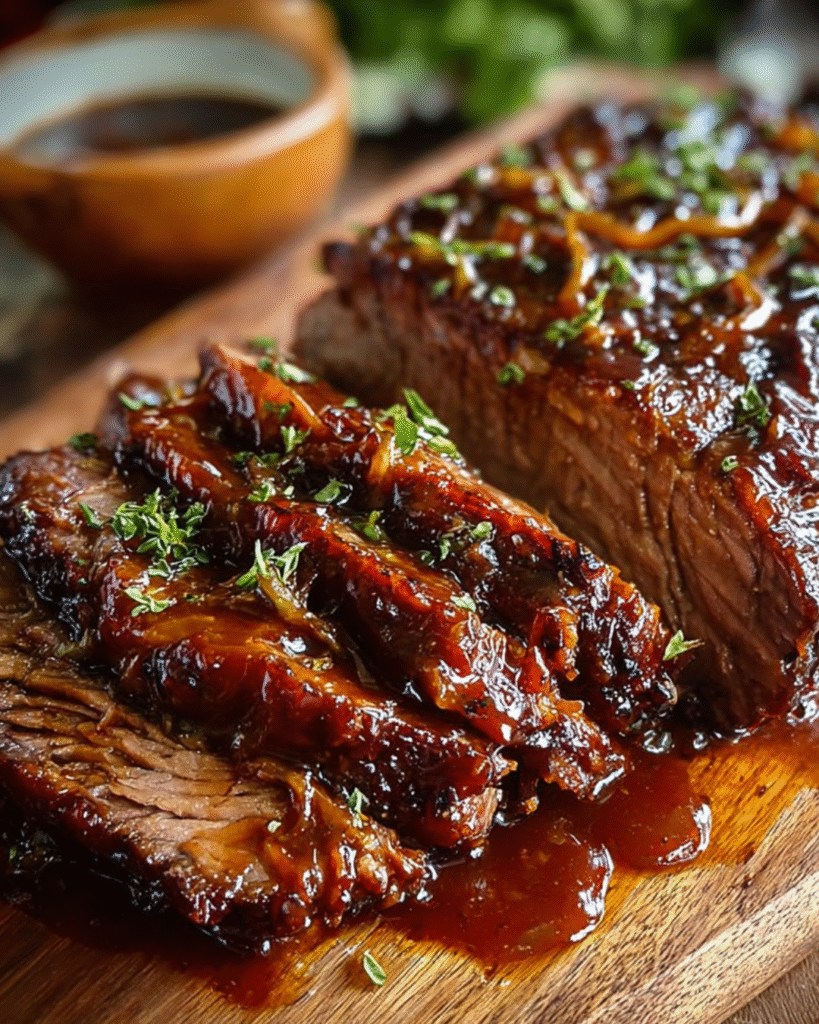
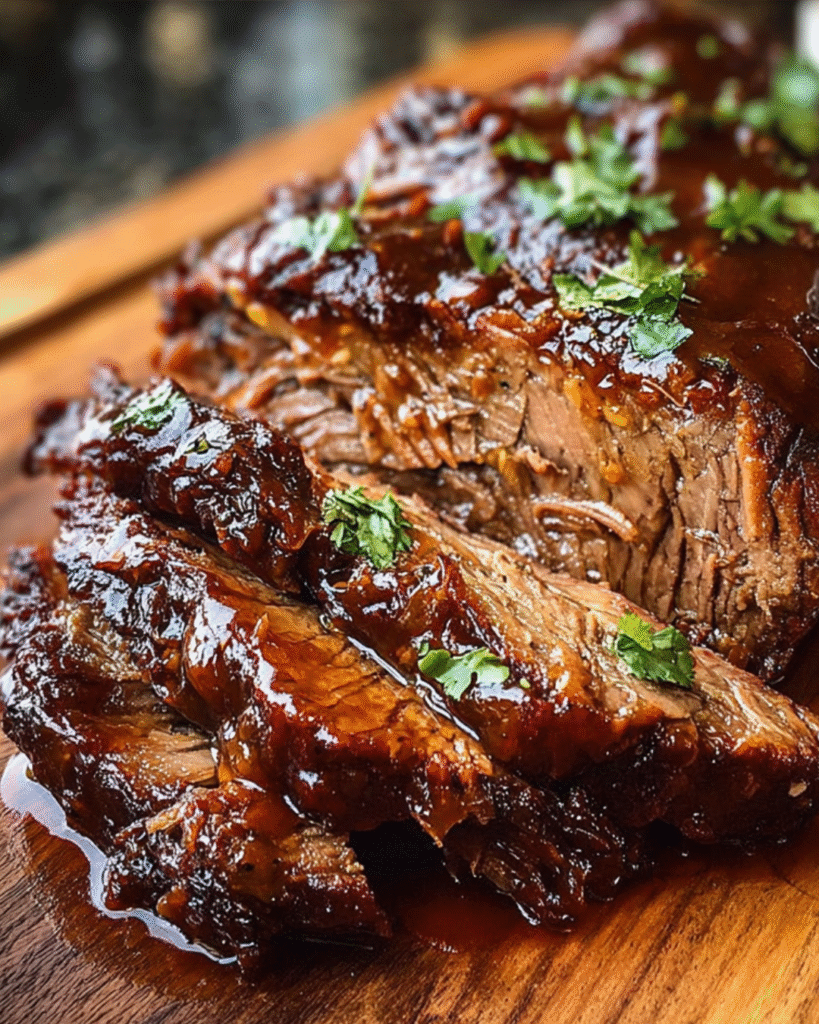
This slow cooker beef brisket transforms a tough, inexpensive cut into fall-apart tender meat by searing it first to develop deep flavor, then braising it low and slow in a rich sauce made from beef broth, barbecue sauce, and aromatic seasonings until it reaches that perfect fork-tender texture. The technique involves creating layers of flavor through proper searing, building a flavorful braising liquid that both tenderizes and enriches the meat, then allowing hours of gentle heat to break down tough connective tissue into succulent gelatin. With its hands-off cooking method that requires just 15 minutes of active prep before the slow cooker does all the work, this recipe delivers restaurant-quality brisket that’s perfect for feeding a crowd or providing multiple meals from a single cooking session.
Why You’ll Love This Recipe
True Set-and-Forget Cooking – After the brief searing step, the slow cooker handles everything for 8-10 hours while you work, sleep, or attend to other tasks.
Tough-to-Tender Transformation – Brisket starts as one of the toughest beef cuts but becomes incredibly tender through extended low-temperature cooking that melts connective tissue.
Budget-Friendly Luxury – Brisket costs significantly less per pound than premium steaks but tastes equally impressive when cooked properly with patience.
Flavor-Building Sear – The initial browning step creates complex, caramelized flavors impossible to achieve by simply adding raw meat to the slow cooker.
Versatile Serving Options – Serve sliced as a traditional dinner, shredded for sandwiches, or chopped for tacos, making this one cooking effort produce multiple meal possibilities.
Make-Ahead Friendly – Brisket actually improves after resting overnight in the refrigerator, making this perfect for advance preparation before gatherings.
Ingredients You’ll Need
Main Ingredients
2-3 pounds beef brisket – Provides the protein foundation with significant marbling and connective tissue that requires extended cooking but rewards patience with incredible tenderness and flavor.
1 tablespoon olive oil – Creates the cooking medium for searing the brisket and sautéing aromatics while contributing mild, fruity flavor.
1 large onion, sliced – Adds aromatic sweetness and savory depth while contributing moisture and body to the braising liquid.
4 cloves garlic, minced – Delivers pungent, savory foundation that enhances the beef and enriches the sauce significantly.
1 cup beef broth – Forms part of the braising liquid and adds savory depth that keeps the brisket moist while contributing to the sauce.
1 cup barbecue sauce – Provides tangy-sweet flavor and contributes to the sauce consistency while adding classic barbecue character.
2 tablespoons Worcestershire sauce – Adds savory, umami-rich complexity with fermented depth that enhances the beef flavor significantly.
1 tablespoon brown sugar – Balances the acidity from the barbecue sauce while adding molasses notes and promoting caramelization.
1 teaspoon smoked paprika – Contributes smoky depth, vibrant color, and mild sweetness that reinforces barbecue character.
1 teaspoon salt – Seasons the meat directly and helps develop flavor throughout rather than relying solely on the sauce.
½ teaspoon black pepper – Adds warmth and aromatic complexity that enhances the beef without overwhelming other flavors.
½ teaspoon cayenne pepper (optional) – Provides adjustable heat for those who want spicy kick to cut through the richness.
Fresh parsley, chopped (for garnish) – Brings bright green color and fresh herbal notes that finish the dish with visual appeal.
Step-by-Step Instructions
Sear the Brisket Heat the olive oil in a large skillet over medium-high heat until it shimmers and almost begins to smoke. Pat the brisket completely dry with paper towels (moisture prevents proper browning), then carefully place it in the hot skillet. Sear for 4-5 minutes on the first side without moving it, allowing a deep brown crust to develop, then flip and sear the second side for another 4-5 minutes. Remove the seared brisket to a plate and set aside.
Sauté the Aromatics In the same skillet with the remaining oil and browned bits, add the sliced onion and cook over medium heat for 3-4 minutes, stirring occasionally, until the onion softens and begins to turn translucent. Add the minced garlic and cook for an additional minute, stirring constantly, until fragrant but not browned.
Build the Braising Sauce In a medium bowl, combine the beef broth, barbecue sauce, Worcestershire sauce, brown sugar, smoked paprika, salt, black pepper, and cayenne pepper if using. Whisk everything together thoroughly until the brown sugar dissolves and the mixture is uniform.
Assemble in Slow Cooker Place the seared brisket in the slow cooker, positioning it fat-side up if there’s a visible fat cap. Top the brisket with the sautéed onions and garlic, distributing them evenly across the surface. Pour the prepared sauce mixture over the brisket, making sure some liquid gets underneath and around the meat for even braising.
Cook Low and Slow Cover the slow cooker with its lid and set it to low heat for 8-10 hours, or high heat for 4-6 hours if you need faster results. Resist the urge to lift the lid unnecessarily during cooking, as this releases heat and extends the cooking time. The brisket is done when it’s fork-tender—a fork should slide through the meat with minimal resistance.
Rest Before Slicing Once the brisket reaches proper tenderness, carefully transfer it to a cutting board using tongs or two large spatulas (it will be very tender and may want to fall apart). Tent loosely with aluminum foil and let it rest for 10-15 minutes, which allows the juices to redistribute throughout the meat rather than flooding out when you slice.
Slice and Serve After resting, use a sharp knife to slice the brisket against the grain (perpendicular to the muscle fibers) into slices approximately ¼-½ inch thick. Slicing against the grain is crucial for tender bites—cutting with the grain creates chewy, stringy texture. Arrange the sliced brisket on a serving platter, ladle the sauce from the slow cooker over the top, and garnish with chopped fresh parsley before serving.
Recipe Notes & Tips
Searing is Non-Negotiable – Don’t skip this step; the Maillard reaction creates complex flavors impossible to develop through slow cooking alone.
Grain Direction Matters – Identify the direction of the muscle fibers before cooking and slice perpendicular to them for maximum tenderness.
Fat Cap Positioning – If your brisket has a thick fat cap, position it facing up during cooking so the fat bastes the meat as it melts.
Sauce Thickness – If the sauce seems too thin after cooking, remove the brisket and simmer the sauce uncovered on the stovetop to reduce and concentrate.
Make-Ahead Advantage – Cook the brisket completely, refrigerate overnight in the sauce, then reheat gently for even better flavor and easier slicing.
Gluten-Free Verification – Ensure your barbecue sauce and Worcestershire sauce are certified gluten-free if serving gluten-sensitive diners.
Nutritional Information
Prep Time: 15 minutes
Cook Time: 8-10 hours (low) or 4-6 hours (high)
Total Time: 8 hours 15 minutes to 10 hours 15 minutes
Servings: 6 portions (approximately 5-6 ounces cooked brisket per serving)
Calories: Approximately 350 calories per serving
Perfect Pairings
Creamy Coleslaw – Tangy, crunchy slaw provides cooling contrast and textural variety that balances the rich, tender brisket.
Mashed Potatoes – Creamy mashed potatoes soak up the flavorful sauce beautifully while adding comforting starch to the meal.
Cornbread – Sweet, crumbly cornbread offers classic barbecue pairing that complements the smoky, tangy brisket perfectly.
Roasted Vegetables – Simple roasted carrots, Brussels sprouts, or green beans add nutrition and lighter elements that balance the rich meat.
Ideal Occasions
Sunday Dinner Centerpiece – Start this in the morning and come home to dinner ready, making Sundays relaxing rather than stressful.
Crowd-Feeding Gatherings – One brisket feeds 6-8 people generously, making this practical for family gatherings or casual entertaining.
Make-Ahead Holiday Prep – Cook days before a holiday, refrigerate, then simply reheat when needed to free up oven space and reduce stress.
Meal Prep Sessions – One cooking effort provides multiple meals throughout the week when portioned and refrigerated or frozen.
Storage & Serving Tips
Refrigerator Storage – Store sliced brisket submerged in the sauce in an airtight container for up to 5 days, with flavors improving after a day.
Freezing Instructions – Freeze brisket slices with sauce in freezer-safe containers for up to 3 months; thaw overnight in refrigerator before reheating.
Reheating Method – Warm gently in a covered pot on the stovetop with the sauce, or in a 300°F oven covered with foil until heated through.
Leftover Transformations – Shred leftover brisket for sandwiches, tacos, quesadillas, nachos, or hash, making one cooking effort produce multiple distinct meals.
Creative Variations to Try
Asian-Inspired – Replace barbecue sauce with hoisin sauce, add ginger and five-spice, and serve with rice for fusion flavors.
Coffee-Rubbed – Add 2 tablespoons of ground coffee to the rub for complex, slightly bitter notes that enhance the beef.
Beer-Braised – Replace half the beef broth with dark beer for deeper, more complex braising liquid with malty character.
Tex-Mex Style – Use Mexican spices, add chipotles in adobo, and serve with tortillas, beans, and fresh salsa.
Troubleshooting Common Issues
Tough Brisket – Insufficient cooking time is the culprit; continue cooking until truly fork-tender regardless of time estimates.
Dry Meat – Using too-lean brisket or cooking uncovered causes dryness; ensure proper marbling and keep the lid on throughout cooking.
Bland Flavor – Under-seasoning or skipping the sear creates bland results; season generously and don’t skip browning for proper flavor development.
Watery Sauce – Too much liquid or not enough reduction creates thin sauce; remove the lid for the last hour or reduce separately on the stovetop.
Why This Recipe Works
The success of slow cooker beef brisket relies on understanding how extended low-temperature cooking transforms tough connective tissue into tender, succulent meat through collagen breakdown. Brisket contains significant amounts of collagen—the tough protein that connects muscle fibers—which requires temperatures above 160°F maintained for several hours to convert into gelatin. The slow cooker’s gentle, consistent heat maintains the ideal temperature range (around 200-210°F on low) for this conversion without drying out the meat through excessive heat. Searing the brisket first creates flavorful browned bits through the Maillard reaction that would never develop through slow cooking alone, adding complexity and depth impossible to achieve otherwise. These browned bits also dissolve into the braising liquid, enriching the sauce significantly. Sautéing the aromatics in the same pan captures those flavors while allowing the onions and garlic to develop sweetness and release essential oils. The combination of beef broth and barbecue sauce creates a balanced braising liquid with both savory depth and tangy sweetness, while the Worcestershire sauce adds umami that enhances the beef’s natural flavors. Brown sugar balances acidity and promotes caramelization, while smoked paprika reinforces the barbecue character without requiring actual smoking equipment. The extended cooking time allows the acidic components in the sauce to tenderize the meat while the gentle heat prevents the muscle proteins from seizing and becoming tough as they would with high heat. Cooking the brisket submerged in liquid prevents it from drying out while the fat renders slowly and bastes the meat from within. The resting period after cooking allows the muscle fibers to relax and reabsorb moisture that was driven toward the center during cooking. Slicing against the grain cuts through the muscle fibers rather than parallel to them, creating tender bites that fall apart easily rather than chewy strands. At approximately 350 calories per serving with 30g of protein, this brisket provides substantial nutrition while the reasonable portion sizes and relatively lean preparation method (braising versus smoking with heavy rubs) make it more balanced than traditional barbecue preparations.
Final Thoughts
Slow cooker beef brisket demonstrates how understanding fundamental cooking principles—proper searing, collagen breakdown, and grain direction—allows home cooks to achieve professional results with tough, inexpensive cuts that reward patience with incredible flavor and texture. This recipe proves that impressive dinners don’t require constant attention or advanced techniques when you harness the power of time and gentle heat through slow cooking. The make-ahead friendly nature and versatile serving options make this practical for real-world meal planning where cooking once and eating multiple times saves significant effort over the course of a week. While brisket is undeniably rich, the braising method keeps it relatively lean compared to smoked versions with heavy rubs, and reasonable portions with vegetable sides create balanced meals appropriate for regular enjoyment when you want something special without excessive indulgence.