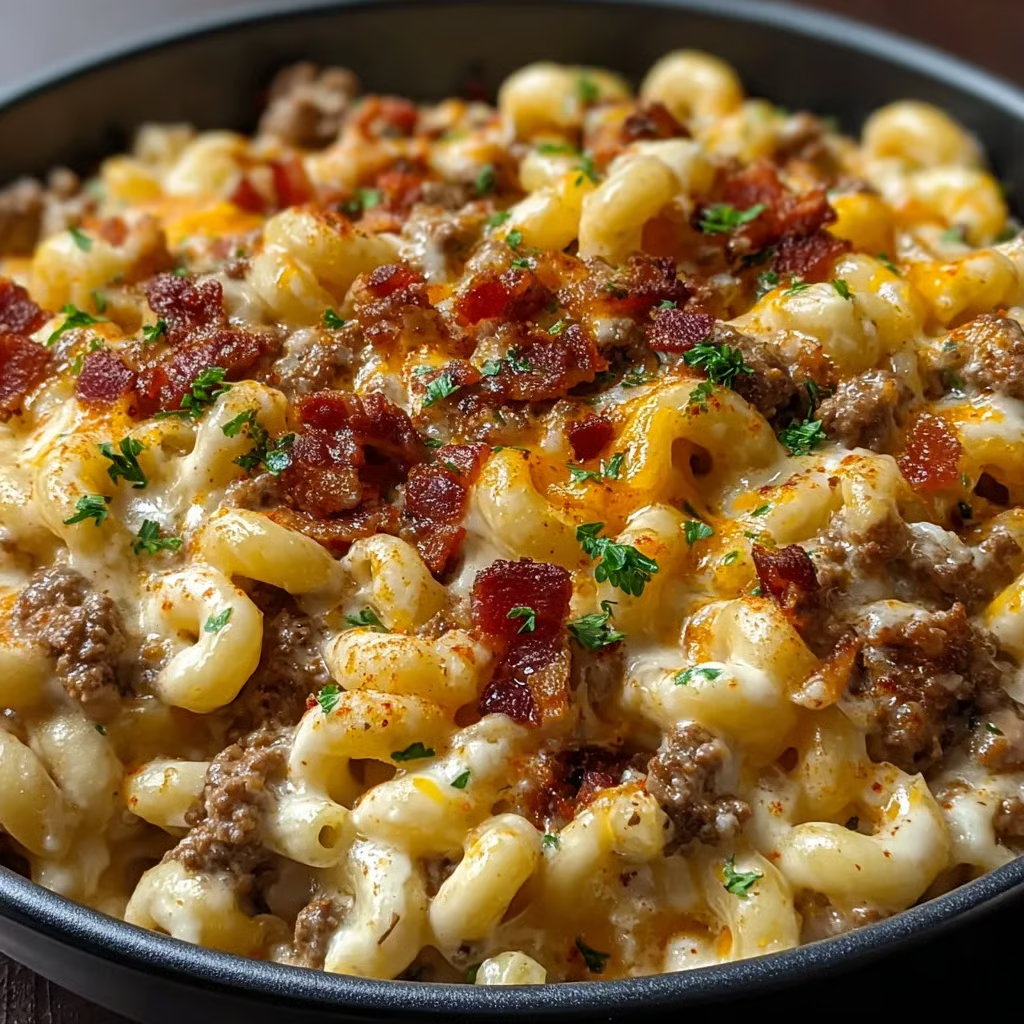
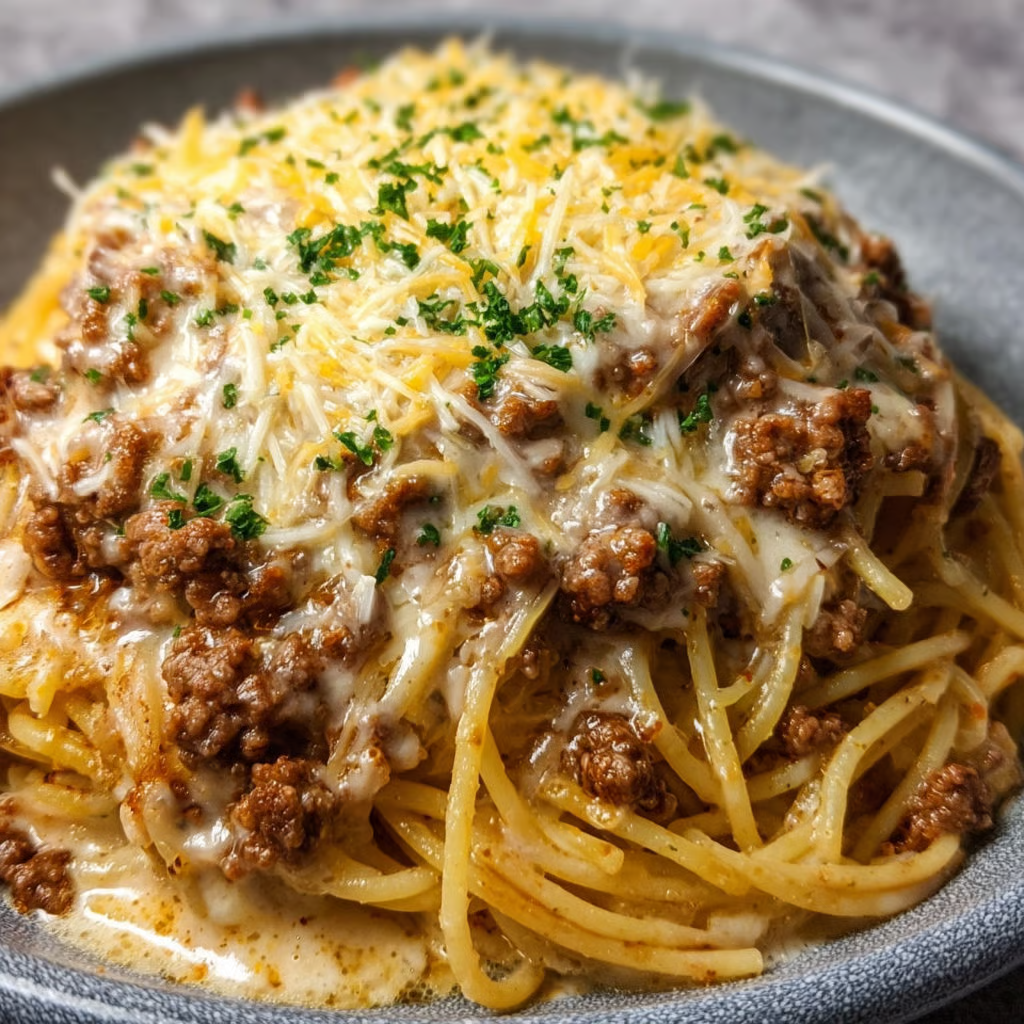
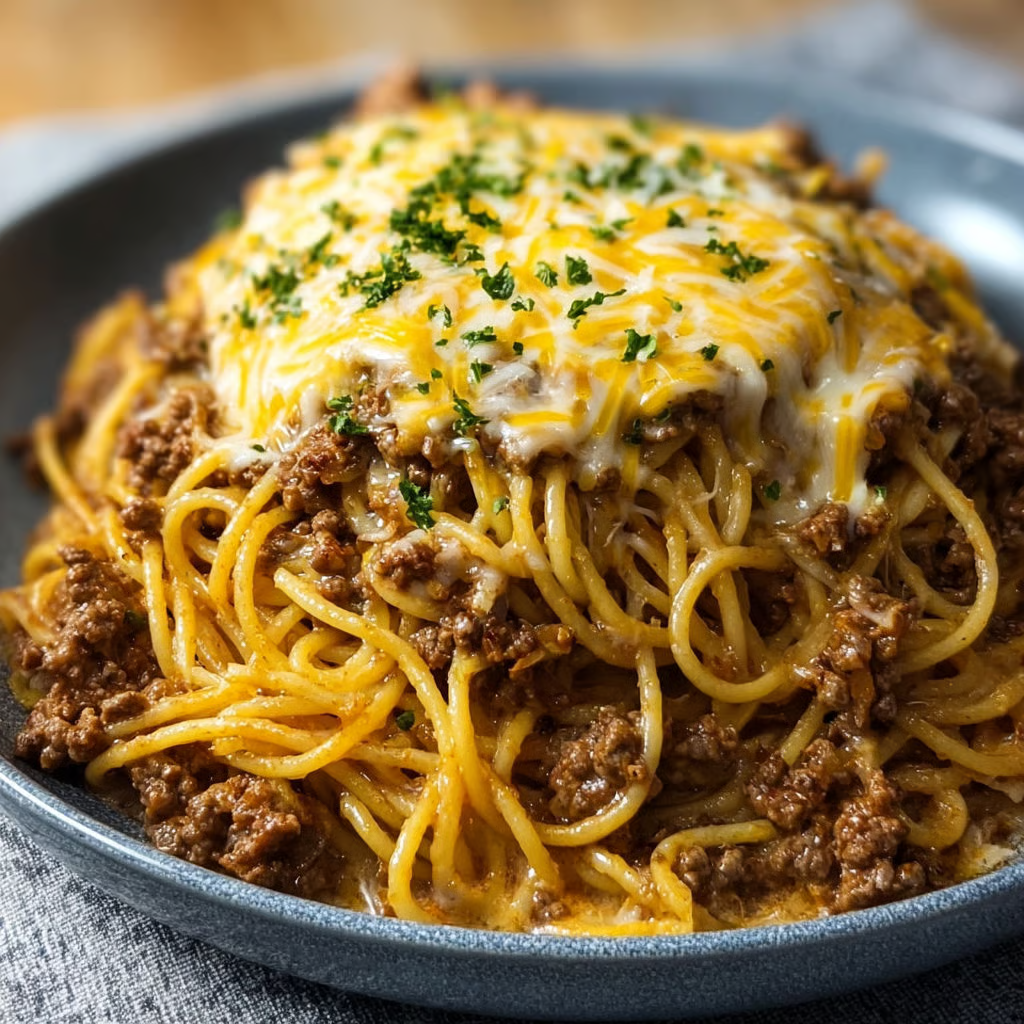
Cheesy Garlic Butter Beef Spaghetti brings together the bold, savory richness of seasoned ground beef, the aromatic depth of butter-sautéed garlic and onion, and the luscious creaminess of a two-cheese sauce — all tossed with perfectly cooked spaghetti in a single skillet. The technique centers on building layers of flavor directly in the pan, from browning the beef to deglazing with cream and broth, then finishing with cheddar and Parmesan melted low and slow for a silky, cohesive sauce. The result is a deeply satisfying, restaurant-quality pasta that comes together in under 45 minutes with pantry-friendly ingredients.
Why You’ll Love This Recipe
- One-Skillet Simplicity – Everything from browning the beef to finishing the sauce happens in a single deep skillet, keeping cleanup minimal and flavors concentrated.
- Layered, Complex Flavor – Each stage — browning, sautéing aromatics, deglazing, and cheese melting — adds depth that makes this dish taste far more involved than the prep time suggests.
- Pantry-Friendly Ingredients – Ground beef, dried spaghetti, heavy cream, and block cheese are staples most home cooks already have on hand, making this an ideal weeknight go-to.
- Customizable Heat Level – Red pepper flakes are entirely optional, so the dish can be as mild or as assertive as you prefer — adaptable for family dinners or adult palates alike.
- Crowd-Pleasing Comfort Food – The combination of garlic butter, melted cheese, and hearty beef appeals universally across age groups and occasions, from weeknight dinners to casual entertaining.
- Reliable, Repeatable Results – Clear technique guidance — including fat draining, gradual cheese addition, and a brief rest before serving — ensures consistent success every time you make it.
Ingredients You’ll Need
Pasta
- 10 oz dried spaghetti – the classic long-noodle format that catches and holds the creamy sauce in every twist; dried ensures a proper al dente bite.
Beef
- 1 lb ground beef – provides the primary protein and savory depth; 80/20 fat content is recommended for flavor without excess grease.
Fats
- 1 tbsp olive oil (optional) – raises the smoke point of butter during initial browning to prevent burning.
- 3 tbsp unsalted butter, divided – 1 tbsp for browning the beef; 2 tbsp added later to enrich the aromatics and form the sauce base.
Aromatics
- 3 cloves garlic, minced – delivers the signature pungent, savory backbone; mincing ensures even distribution and fast flavor release.
- 1 small yellow onion, finely diced – provides natural sweetness and aromatic body; fine dice ensures it softens fully within the sauté time.
Sauce
- 1¼ cups heavy cream or half-and-half – the fat-rich liquid base that emulsifies with cheese to form a smooth, cohesive coating sauce.
- ½ cup low-sodium beef broth or reserved pasta water – thins the sauce to ideal consistency while adding savory depth; pasta water also contributes starch for sauce adhesion.
Cheese
- 1 cup shredded cheddar cheese – melts into the cream for bold, tangy richness; shred from a block for best melt, as pre-shredded varieties contain anti-caking agents that hinder smoothness.
- ⅓ to ½ cup grated Parmesan cheese – adds salty, nutty complexity and helps thicken the sauce through its fine texture.
Seasonings
- 1 tsp Italian seasoning – a dried herb blend of oregano, basil, and thyme that rounds out the sauce with herbaceous warmth.
- 1 tsp garlic powder – complements and deepens the fresh garlic’s flavor with a toasted, mellower note.
- ½ tsp onion powder – reinforces the sautéed onion with an underlying savory sweetness throughout the sauce.
- ¾ tsp kosher salt, plus more to taste – seasons the sauce layer; kosher salt’s coarser grain makes incremental seasoning easier to control.
- ¼ tsp cracked black pepper – adds mild sharpness and aroma that cuts through the richness of cream and cheese.
- Pinch red pepper flakes (optional) – introduces a gentle background heat that brightens the overall flavor profile without overpowering.
Garnish
- Chopped fresh parsley or green onions (optional) – adds a fresh, bright visual contrast and a subtle herbal lift to the finished dish.
Step-by-Step Instructions
Step 1: Cook the Spaghetti — Bring a large pot of generously salted water to a rolling boil. Add the dried spaghetti and cook according to package directions until just al dente, approximately 9 to 10 minutes — the pasta will continue cooking briefly when tossed in the sauce. Reserve ½ cup of pasta water before draining, then drain and set aside, tossing with a tiny drizzle of oil to prevent clumping.
Step 2: Brown the Ground Beef — Heat a large, deep skillet over medium-high heat and melt 1 tablespoon of butter, adding the olive oil if using. Add the ground beef and cook for 5 to 7 minutes, breaking it into small, even crumbles with a wooden spoon until no pink remains and the surface is evenly browned. Carefully drain the excess rendered fat, leaving just enough to coat the pan.
Step 3: Sauté the Aromatics — Add the finely diced yellow onion to the skillet and sauté over medium heat for 3 to 4 minutes, stirring occasionally, until translucent and softened. Add the minced garlic and cook for approximately 30 seconds, stirring constantly, just until fragrant — do not let it brown, which would introduce bitterness.
Step 4: Build the Seasoned Butter Base — Add the remaining 2 tablespoons of butter to the skillet along with the Italian seasoning, garlic powder, onion powder, salt, black pepper, and red pepper flakes if using. Stir continuously for about 1 minute, allowing the butter to melt and the dry seasonings to bloom in the fat, fully coating the beef and aromatics.
Step 5: Simmer the Cream Sauce — Pour in the heavy cream and beef broth (or reserved pasta water), using a wooden spoon to deglaze the pan and incorporate any caramelized bits from the base. Stir to combine and bring to a gentle simmer over medium heat, cooking for 3 to 4 minutes until the sauce begins to thicken and lightly coat the back of a spoon.
Step 6: Melt in the Cheese — Reduce the heat to low. Gradually add the shredded cheddar a small handful at a time, stirring until each addition is fully melted before adding the next. Stir in the grated Parmesan until fully incorporated. If the sauce is too thick, add a splash of reserved pasta water to loosen it to a silky, pourable consistency.
Step 7: Toss the Pasta — Add the drained spaghetti directly to the skillet. Using tongs, gently lift and toss the pasta for 2 to 3 minutes, turning it through the sauce until every strand is evenly coated and the beef is well distributed throughout.
Step 8: Rest and Serve — Remove the skillet from heat and allow the pasta to rest for 2 minutes so the sauce tightens and adheres fully to the noodles. Serve immediately, garnished with freshly chopped parsley or sliced green onions if desired.
Recipe Notes & Tips
- Gradual Cheese Addition Is Essential – Adding cheese all at once to a hot sauce causes the proteins to seize and clump. Introducing it in small batches over low heat gives it time to melt smoothly into the fat without breaking.
- Shred Cheese from the Block – Pre-shredded packaged cheese is coated in anti-caking agents like cellulose that prevent smooth melting. For a silky, seamless sauce, always shred cheddar and Parmesan fresh.
- Reserve the Pasta Water – The starchy cooking water is a powerful sauce adjuster. A few tablespoons can instantly loosen a sauce that has thickened too much while also helping it cling to the noodles.
- Don’t Skip the Rest Period – Letting the finished pasta sit off heat for 2 minutes allows the sauce to thicken slightly and penetrate the noodles fully, producing a cohesive dish rather than a loose, watery one.
- Drain Fat, But Not All of It – Removing excess beef fat prevents a greasy sauce, but leaving a thin coating helps sauté the aromatics and carries fat-soluble flavor compounds into the finished dish.
- Adjust Cream Percentage to Preference – Heavy cream produces a richer, thicker sauce; half-and-half creates a slightly lighter result. If using half-and-half, allow an extra minute of simmering to reach the same consistency.
Nutritional Information
- Prep Time: 15 minutes
- Cooking Time: 25 minutes
- Total Time: 40 minutes
- Servings: 4 to 5 hearty portions
- Calories: ~740 per serving (based on 4 servings using heavy cream; decreases with half-and-half or leaner beef)
- Fat: 46 g | Carbohydrates: 47 g | Protein: 36 g
Nutritional values are estimates. Exact figures vary based on specific brands, beef fat percentage, and cream type.
Perfect Pairings
- Crusty Garlic Bread – A thick slice of toasted sourdough or baguette rubbed with garlic and butter is ideal for scooping up the rich, cheesy sauce left in the bowl.
- Simple Green Salad – A crisp romaine or arugula salad dressed with red wine vinaigrette provides refreshing acidity that cuts through the richness of the pasta.
- Roasted Broccoli or Asparagus – Oven-roasted vegetables add a slightly bitter, charred counterpoint that balances the creamy, savory sauce beautifully.
- Chilled Sparkling Water or Light Red Wine – Sparkling water with lemon cleanses the palate between bites; a light-bodied Chianti or Barbera d’Asti complements the beef without overpowering the cream-based sauce.
Ideal Occasions
- Weeknight Family Dinners – The 40-minute total time and single-skillet approach make it perfectly suited for busy evenings when a satisfying, crowd-pleasing meal is needed without extensive cleanup.
- Casual Dinner Party Entertaining – Scales easily to serve 6 to 8 and holds well in the skillet over very low heat, making it practical for informal gatherings where staggered serving is expected.
- Meal Prep and Next-Day Lunches – The dish reheats exceptionally well with a small splash of broth or water to restore sauce consistency, making it an excellent candidate for batch cooking.
- Cold-Weather Comfort Cooking – The richness of garlic butter, cream, and melted cheese makes this an especially warming, indulgent meal during autumn and winter months.
Storage & Serving Tips
- Refrigerator Storage – Transfer leftovers to an airtight container and refrigerate for up to 3 days. The pasta will absorb sauce as it sits — add a splash of cream or broth when reheating to restore consistency.
- Freezing Limitations – Cream-based sauces tend to separate upon thawing, altering the texture significantly. This dish is best enjoyed fresh or refrigerated rather than frozen.
- Reheating Method – Reheat gently in a skillet over low to medium-low heat with 2 to 3 tablespoons of water, broth, or cream, stirring frequently until the sauce re-emulsifies and the pasta is warmed through. Avoid high heat, which can cause the cheese sauce to break.
- Serving Temperature – Serve immediately after the 2-minute rest while the sauce is at its most fluid and glossy. Once plated, the dish cools and thickens quickly, so prompt service gives the best presentation and texture.
Creative Variations to Try
- Spicy Calabrian Chili Version – Replace the red pepper flakes with 1 to 2 teaspoons of Calabrian chili paste stirred into the sauce for a more complex, fruity heat that elevates the dish significantly.
- Mushroom and Beef Blend – Add 8 oz of sliced cremini mushrooms to the skillet after draining the beef fat, sautéing until golden before continuing with the aromatics — this adds an earthy, umami depth.
- Four-Cheese Upgrade – Swap half the cheddar for Gruyère and add a small amount of fontina for a more nuanced, nutty profile inspired by alpine fondue technique.
- Lighter Turkey or Chicken Version – Substitute ground turkey or ground chicken for the beef and use half-and-half in place of heavy cream for a noticeably lighter dish with fewer calories while retaining the garlic butter character.
Troubleshooting Common Issues
- Sauce is grainy or broken – This occurs when cheese is added to a sauce that is too hot or all at once. Remove the pan from heat entirely, let it cool briefly, then stir in cheese very gradually in small amounts until smooth.
- Sauce is too thick – Add reserved pasta water one tablespoon at a time, stirring after each addition until the desired consistency is reached. The starch also helps the sauce reincorporate without diluting the flavor.
- Sauce is too thin after adding pasta – Return the skillet to medium-low heat and toss for an additional 1 to 2 minutes — the gentle heat will evaporate excess liquid and allow the sauce to tighten around the noodles.
- Beef is bland or underseasoned – Season the beef lightly during browning, not just at the end. Building seasoning in layers throughout the cooking process produces a far more flavorful result than adjusting only once the dish is finished.
Why This Recipe Works
The success of this dish is built on classical sauce-making technique adapted for a quick weeknight format. Browning the ground beef first over medium-high heat triggers the Maillard reaction — a chemical process that develops hundreds of new flavor compounds on the surface of the meat, creating the savory, caramelized depth that defines a good meat sauce. Draining excess fat after browning is equally important: retaining too much grease destabilizes the cream sauce emulsion and produces an oily finish, while removing it entirely strips essential flavor carriers. The two-stage butter approach — one tablespoon for browning, two tablespoons added with the seasonings — ensures buttery richness is present both in the early foundation and in the finished sauce. Cream-based pasta sauces work through emulsification: fat from the butter and cream binds with proteins from the cheese to form a stable, cohesive coating. Keeping the heat low during cheese addition is critical — high heat causes proteins to contract too quickly, breaking the sauce into a greasy, grainy texture rather than a smooth one. The Parmesan contributes more than flavor: its fine texture and natural glutamates act as a thickening agent and umami amplifier simultaneously. At approximately 740 calories per serving, this dish is a deliberate indulgence — rich in protein (36 g) and deeply satisfying in smaller portions.
Final Thoughts
Cheesy Garlic Butter Beef Spaghetti is the kind of recipe that earns a permanent place in the weekly rotation — not because it cuts corners, but because it rewards sound technique with consistently excellent results. Every element, from the bloomed spices to the gradually melted cheese, serves a specific purpose that contributes to the final dish. At around 740 calories per serving with 36 grams of protein, it is a genuinely filling, nutritionally substantial meal. For a lighter take, substituting half-and-half for heavy cream and ground turkey for beef reduces calories meaningfully while preserving the essential garlic butter and cheesy character that makes this dish so compelling in the first place.