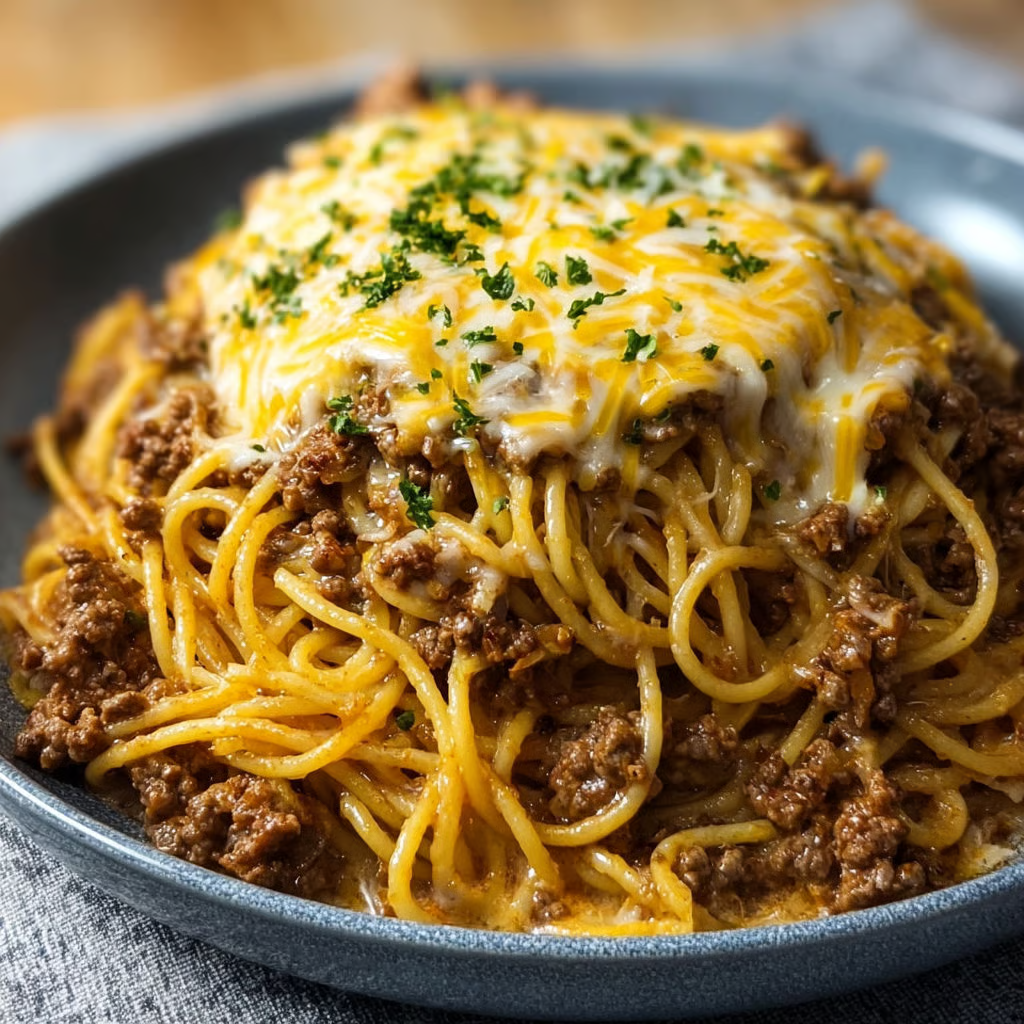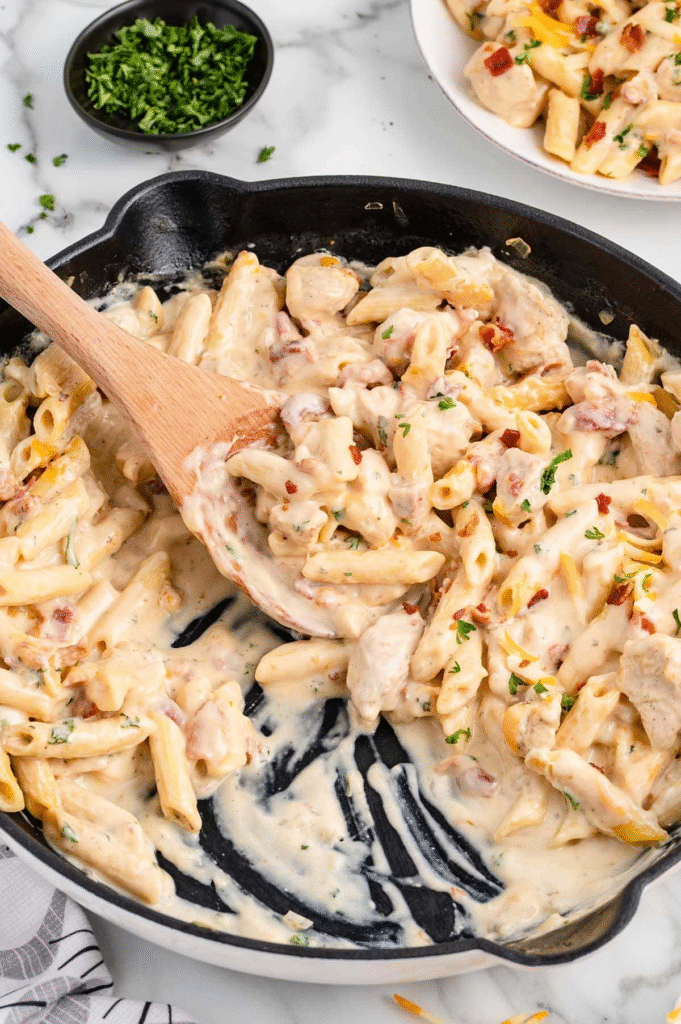
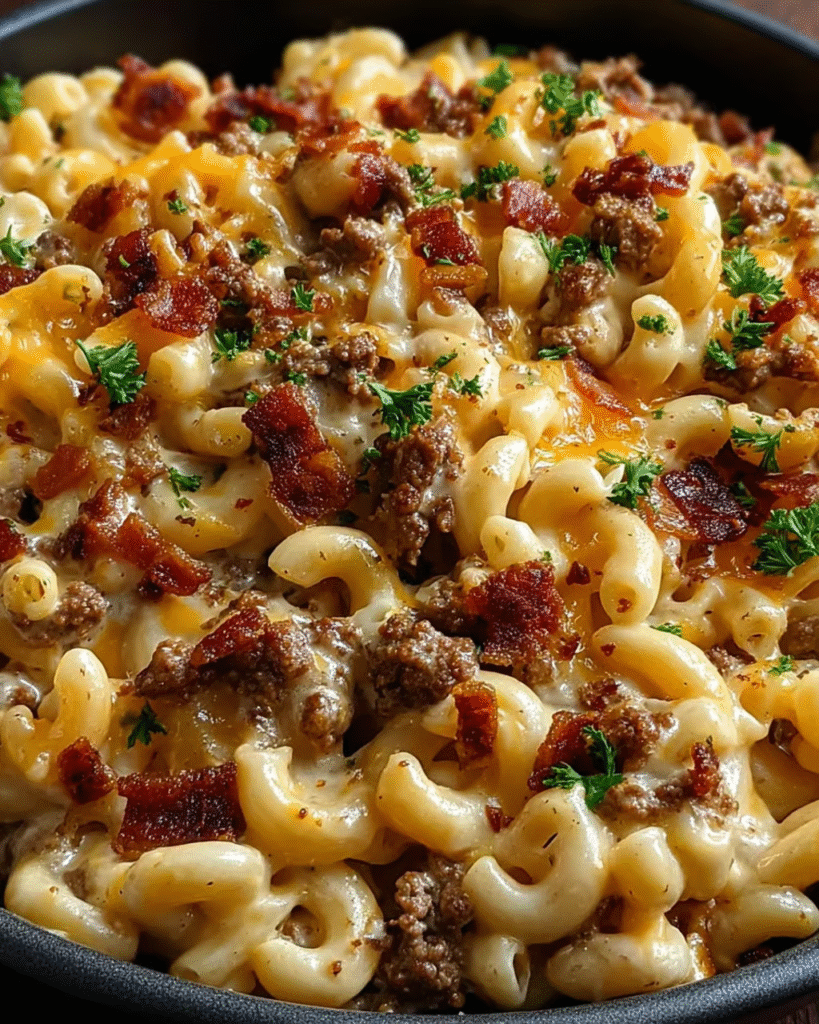
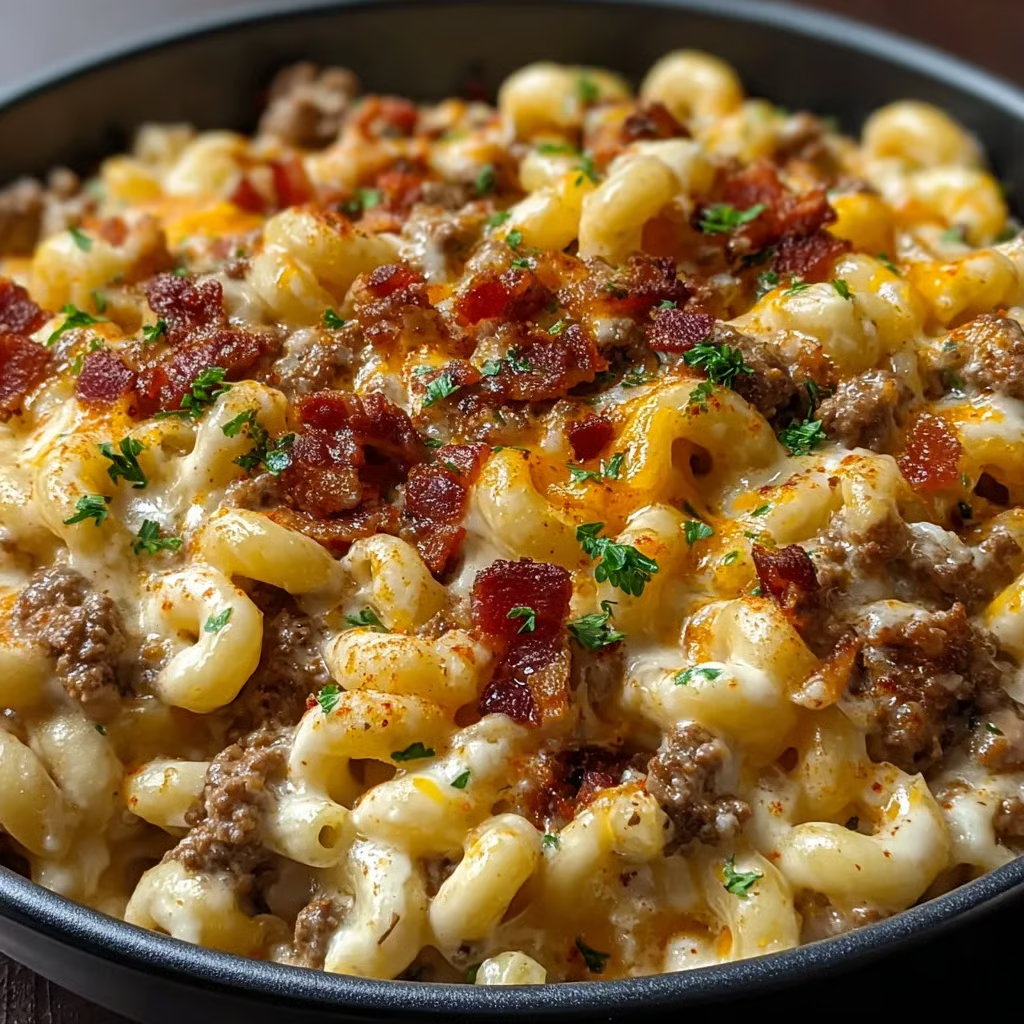
Creamy Bacon Cheeseburger Alfredo takes the iconic flavors of a loaded bacon cheeseburger — seasoned ground beef, crumbled bacon, and sharp cheddar — and translates them into a rich, skillet-made pasta sauce built on a heavy cream and Parmesan Alfredo base. The technique is straightforward and deliberate: the beef is browned and set aside to preserve its texture, the garlic blooms briefly in the residual fat, and the cream sauce is built in the same pan so every caramelized bit from the beef sear is incorporated into the finished sauce. The result is a deeply satisfying, family-friendly pasta that comes together in 30 minutes and delivers the comfort of two beloved dishes simultaneously.
Why You’ll Love This Recipe
- Cheeseburger Flavor in a Pasta Format – Every element of a classic bacon cheeseburger — seasoned beef, cheddar, bacon, garlic — is present in a form that coats pasta rather than filling a bun, producing a dish that satisfies both cravings at once without feeling like a compromise.
- One Skillet Sauce, No Separate Pot – The entire sauce is built in the skillet that browned the beef, meaning the fond from the sear contributes directly to the depth of the cream sauce and cleanup stays minimal.
- Ready in 30 Minutes – Boiling pasta and browning beef happen in roughly the same time window, and the cream sauce comes together in under 10 minutes, making this one of the faster skillet pasta dinners available for a weeknight.
- Smoked Paprika Does a Lot of Work – A single half-teaspoon of smoked paprika in the beef seasoning introduces a subtle warmth and color that ties the ground beef’s savory notes to the rich cream sauce in a way that plain salt and pepper alone would not.
- Crowd-Pleasing Without Being Fussy – The flavor profile is universally accessible — cheese, bacon, pasta, and beef — making this a reliable choice for feeding mixed groups, children, or anyone who needs a satisfying meal without culinary adventure.
- Highly Customizable Base – The cream sauce and pasta format accommodates additions like cream cheese for extra richness, bell peppers for sweetness, or spinach for a vegetable component without requiring any structural change to the technique.
Ingredients You’ll Need
Main Ingredients
- 12 oz elbow macaroni or pasta of choice – the short, curved format of elbow macaroni catches and holds the creamy, cheese-rich sauce in every hollow; any short pasta shape with ridges or curves — rotini, penne, cavatappi — works equally well.
- 1 lb ground beef – the primary protein and the flavor foundation of the dish; 80/20 fat content recommended for the sear flavor its rendered fat contributes to the pan before the garlic and cream are added.
- 1 tbsp olive oil – ensures sufficient fat in the skillet for the initial beef browning, particularly useful if using leaner ground beef that renders less fat on its own.
- 3 cloves garlic, minced – sautéed in the residual fat after the beef is removed, where it blooms in the concentrated pan drippings and forms the aromatic bridge between the beef layer and the cream sauce.
- 2 cups heavy cream – the primary fat-rich liquid base of the Alfredo-style sauce; its high fat content allows the cheddar and Parmesan to melt smoothly without breaking or becoming grainy.
- 1 cup milk – thins the sauce to a pourable, coating consistency without the excessive richness that an all-cream base would produce; whole milk is preferred for a creamier result.
- 2 cups shredded cheddar cheese – the defining cheese of the cheeseburger flavor profile; adds sharp, tangy richness to the sauce and the orange color that signals cheddar-forward comfort food; shred from a block for smoothest melt.
- ½ cup grated Parmesan cheese – the Alfredo component that adds salty, nutty depth and acts as a natural thickening agent as it melts into the cream base.
- 6 slices bacon, cooked and crumbled – added at the end rather than cooked into the sauce to preserve the textural contrast of crispy bacon bits against the creamy pasta; cook until very crisp for the best result.
- ½ tsp smoked paprika – applied to the beef during browning where its fat-soluble compounds bloom in the rendered fat and infuse the entire pan with a subtle, smoky warmth that carries through to the finished sauce.
- Salt and pepper, to taste – essential at multiple stages: seasoning the beef before browning, and adjusting the finished sauce before serving.
Garnish
- Fresh parsley, chopped – scattered over the finished dish for a bright, herbal visual contrast against the rich, golden sauce and a fresh note that lifts the overall flavor of the final plate.
Step-by-Step Instructions
Step 1: Cook the Pasta — Bring a large pot of generously salted water to a rolling boil. Add the pasta and cook according to package directions until just al dente — the pasta will continue cooking briefly when added to the hot sauce, so pulling it slightly early prevents it from becoming overcooked and soft in the finished dish. Drain and set aside.
Step 2: Brown the Ground Beef — Heat the olive oil in a large skillet over medium heat until shimmering. Add the ground beef and season with salt, pepper, and the smoked paprika. Cook for 6 to 8 minutes, breaking into crumbles with a wooden spoon, until the beef is evenly browned with no pink remaining and some pieces show deeper, caramelized color. Remove the beef from the skillet with a slotted spoon and set aside, leaving the rendered fat and any fond in the pan.
Step 3: Sauté the Garlic — Add the minced garlic directly to the beef fat remaining in the skillet over medium heat. Sauté for approximately 30 seconds, stirring constantly, until fragrant — the garlic cooks extremely quickly in the concentrated fat and will turn bitter if allowed to brown. This brief bloom in the beef drippings gives the garlic a depth it would not develop in neutral oil alone.
Step 4: Build the Cream Sauce — Pour in the heavy cream and milk and increase the heat slightly to bring the mixture to a gentle simmer, stirring continuously to prevent the cream from scorching on the bottom of the pan. Once simmering, reduce to medium-low and begin adding the shredded cheddar in small handfuls, stirring after each addition until fully melted before adding the next. Add the grated Parmesan and continue stirring until the sauce is smooth, glossy, and thick enough to coat the back of a spoon.
Step 5: Combine Pasta and Beef — Add the drained pasta and the browned ground beef to the skillet. Stir thoroughly with tongs or a large spoon for 1 to 2 minutes until the pasta and beef are evenly coated in the cream sauce and heated through. If the sauce has thickened too much during this stage, add a splash of reserved pasta water or milk to loosen it back to a fluid, coating consistency.
Step 6: Add the Bacon and Serve — Scatter the cooked, crumbled bacon over the pasta and fold it in gently with a single stir or two — just enough to distribute it without breaking the crumbles down into the sauce. Serve immediately, garnished with freshly chopped parsley and extra shredded cheddar if desired. This dish is best eaten straight from the skillet while the sauce is at its most fluid and the bacon retains its crunch.
Recipe Notes & Tips
- Shred the Cheddar from a Block – Pre-shredded cheddar is coated in anti-caking agents like potato starch or cellulose that prevent smooth melting and can leave the sauce with a slightly grainy texture. Freshly shredded block cheddar melts into the cream base seamlessly and produces a noticeably smoother sauce.
- Add Cheese Over Low Heat and Gradually – The cream must be at a gentle simmer — not a rolling boil — when the cheese is added. Too much heat causes the fat to separate from the proteins in the cheese, breaking the sauce into a greasy, curdled texture. Small additions and constant stirring are the two most important technique details for a smooth Alfredo-style sauce.
- Season the Beef Assertively – The smoked paprika, salt, and pepper applied to the beef before browning season the protein at the surface level and contribute to the fond that flavors the entire sauce. Under-seasoned beef produces a bland pasta regardless of how well the sauce is seasoned afterward.
- Pull the Pasta at Al Dente – The pasta continues absorbing liquid and softening once it is added to the cream sauce. Cooking it to the package’s minimum time — or one minute less — ensures it finishes at the correct texture in the finished dish rather than turning mushy.
- Add Bacon Last – Folding the crumbled bacon in at the very end rather than cooking it into the sauce is the detail that preserves the textural contrast between the crispy bacon and the creamy pasta. Bacon simmered in sauce loses its crunch entirely within minutes and becomes soft and indistinguishable from the other components.
- Serve Immediately – Cream-based pasta sauces thicken rapidly as they cool and the pasta continues to absorb liquid off the heat. Serve directly from the skillet while the sauce is still fluid and coats each piece of pasta loosely rather than clumping.
Nutritional Information
- Prep Time: 10 minutes
- Cook Time: 20 minutes
- Total Time: 30 minutes
- Servings: 4 to 6
- Calories: Approximately 720 to 850 per serving based on 4 portions, depending on bacon brand and beef fat content
- Primary Macros: High protein from beef, bacon, and cheese; high fat from cream, cheddar, Parmesan, and bacon; moderate carbohydrates from pasta
Nutritional values are estimates. Using leaner ground beef, reduced-fat milk in place of part of the heavy cream, or turkey bacon will meaningfully reduce the fat and calorie content without significantly altering the sauce technique.
Perfect Pairings
- Simple Romaine Caesar Salad – The crisp, cool bitterness of a Caesar salad with a sharp, lemony dressing provides one of the most effective contrasts to a rich, cream-based pasta, cutting through the fat and resetting the palate between bites.
- Garlic Bread or Toasted Baguette – A natural companion to any cream sauce pasta for soaking up the remaining sauce in the bowl; garlic bread reinforces the garlic note already present in the Alfredo base.
- Steamed Broccoli or Roasted Green Beans – A simple green vegetable side adds color, fiber, and a slightly bitter counterpoint that balances the richness of the cheese and cream without competing with the dish’s primary flavors.
- Cold Sparkling Water with Lemon or a Light Amber Lager – Sparkling water cleanses the richness from the palate effectively between bites; a cold amber lager complements the smoky bacon and cheddar notes with its malt character.
Ideal Occasions
- Weeknight Family Dinners – The 30-minute total time, one-skillet sauce, and universally appealing bacon cheeseburger flavor profile make this an ideal weeknight solution when a satisfying, substantial dinner needs to come together quickly with minimal cleanup.
- Comfort Food Nights – When the priority is maximum satisfaction from a single bowl rather than nutritional restraint, this delivers the kind of layered, rich, cheesy pasta that fulfills that specific craving completely.
- Feeding Teenagers or Large Appetites – The recipe’s high caloric density and deeply familiar flavors make it exceptionally well-suited for feeding hungry teenagers or anyone who needs a large, filling meal from a single dish.
- Casual Potlucks and Gatherings – Scales cleanly to double or triple batches and holds reasonably well in a covered pot over very low heat for 20 to 30 minutes, making it a practical and crowd-pleasing option for informal group feeding.
Storage & Serving Tips
- Refrigerator Storage – Store leftover pasta in an airtight container for up to 3 days. The sauce will thicken considerably during refrigeration as the pasta absorbs the cream — this is normal and corrects easily during reheating.
- Reheating on the Stovetop – Reheat in a skillet over medium-low heat with 2 to 3 tablespoons of milk or cream added per serving, stirring gently until the sauce loosens and the pasta is warmed through. This method restores the creamy consistency far better than microwave reheating.
- Microwave Reheating – If using a microwave, add a splash of milk to the portion before heating, cover loosely, and heat in 60-second intervals on medium power, stirring between each, to avoid the pasta drying out or the sauce separating.
- Avoid Freezing – Cream-based pasta sauces containing cheddar and Parmesan do not freeze well — the emulsion breaks upon thawing, producing a grainy, separated sauce that cannot be fully restored. This dish is best enjoyed fresh or refrigerated for short-term storage only.
Creative Variations to Try
- Cream Cheese Addition – Stir 2 to 3 tablespoons of softened cream cheese into the sauce after the cheddar and Parmesan have melted for an extra layer of tangy richness and a slightly thicker, more stable sauce that holds its consistency longer after plating.
- Jalapeño Bacon Cheeseburger Version – Add ¼ cup of diced pickled jalapeños to the beef while browning and swap the cheddar for pepper jack for a spicier, heat-forward variation that leans into the loaded cheeseburger concept with more assertive flavors.
- Loaded Vegetable Addition – Sauté diced bell peppers and spinach in the skillet after removing the beef and before adding the garlic for a vegetable-forward version that adds color, fiber, and sweetness to balance the richness of the sauce.
- Smash Burger Style with Pickles – Stir 2 tablespoons of finely chopped dill pickles and a teaspoon of yellow mustard into the finished pasta just before serving for a tangy, pickle-forward variation that directly references the smash burger flavor profile the recipe is inspired by.
Troubleshooting Common Issues
- Sauce is grainy or broken – The heat was too high when the cheese was added, or it was added all at once. Remove the pan from heat entirely, allow it to cool for 30 seconds, then add small amounts of cheese one at a time, stirring vigorously between each addition until the sauce smooths out.
- Sauce is too thick after adding pasta – The pasta absorbed more sauce than expected during the combining stage, which is common if the pasta sat after draining and began to dry. Add reserved pasta water or warm milk a tablespoon at a time, stirring after each addition, until the desired consistency returns.
- Beef is releasing excess liquid into the sauce – The beef was not dried before cooking or the skillet was not hot enough, causing it to steam rather than sear. Ensure the oil is shimmering before adding the beef, and cook in a single layer without stirring too frequently to allow browning rather than steaming.
- Bacon is losing its crunch immediately – The bacon was not cooked to full crispness before crumbling, or it was added too early and simmered in the sauce. Cook bacon until very crisp and brittle, add it as the absolute final step, and serve immediately for the best texture contrast.
Why This Recipe Works
The technique logic of this recipe is rooted in a single principle: building every component in the same pan so that no flavor is lost between cooking stages. Browning the beef first and setting it aside rather than leaving it in the pan during the sauce-making stage preserves its texture and prevents it from toughening in the simmering cream, while the fond it leaves behind — the caramelized proteins and fat clinging to the pan surface — dissolves into the cream base the moment liquid is added, contributing a depth of beef flavor that a sauce built in a clean pan could never achieve in 10 minutes. The two-cheese combination of cheddar and Parmesan is deliberate: cheddar provides the bold, tangy, distinctly cheeseburger flavor that defines the dish’s identity, while Parmesan’s lower moisture content and natural glutamates thicken the sauce and amplify its savory character simultaneously. The smoked paprika is applied to the beef rather than the sauce because its flavor compounds are fat-soluble — they extract into the rendered beef fat during browning and distribute through the entire pan, infusing the garlic bloom and the cream sauce with their warmth in a way that adding paprika directly to the cream would not replicate. At approximately 720 to 850 calories per serving, this is an intentionally indulgent dish that delivers its richness through quality technique rather than excessive quantities — every high-calorie component is earning its place in the flavor architecture of the finished bowl.
Final Thoughts
Creamy Bacon Cheeseburger Alfredo works because it commits fully to its concept rather than hedging between the two dishes it references. The bacon cheeseburger flavors are not subtle background notes — they are the point, executed through seasoned beef, sharp cheddar, crispy bacon, and smoked paprika in a cream sauce that ties everything together with the richness Alfredo is known for. The 30-minute timeline is achievable precisely because the technique is efficient: nothing is made separately that can be made in the same pan, and every stage builds directly on the one before it. For those looking to lighten the dish, substituting half the heavy cream with whole milk and using turkey bacon reduces the fat and calorie content meaningfully while keeping the sauce structure and the essential cheeseburger flavor profile entirely intact.