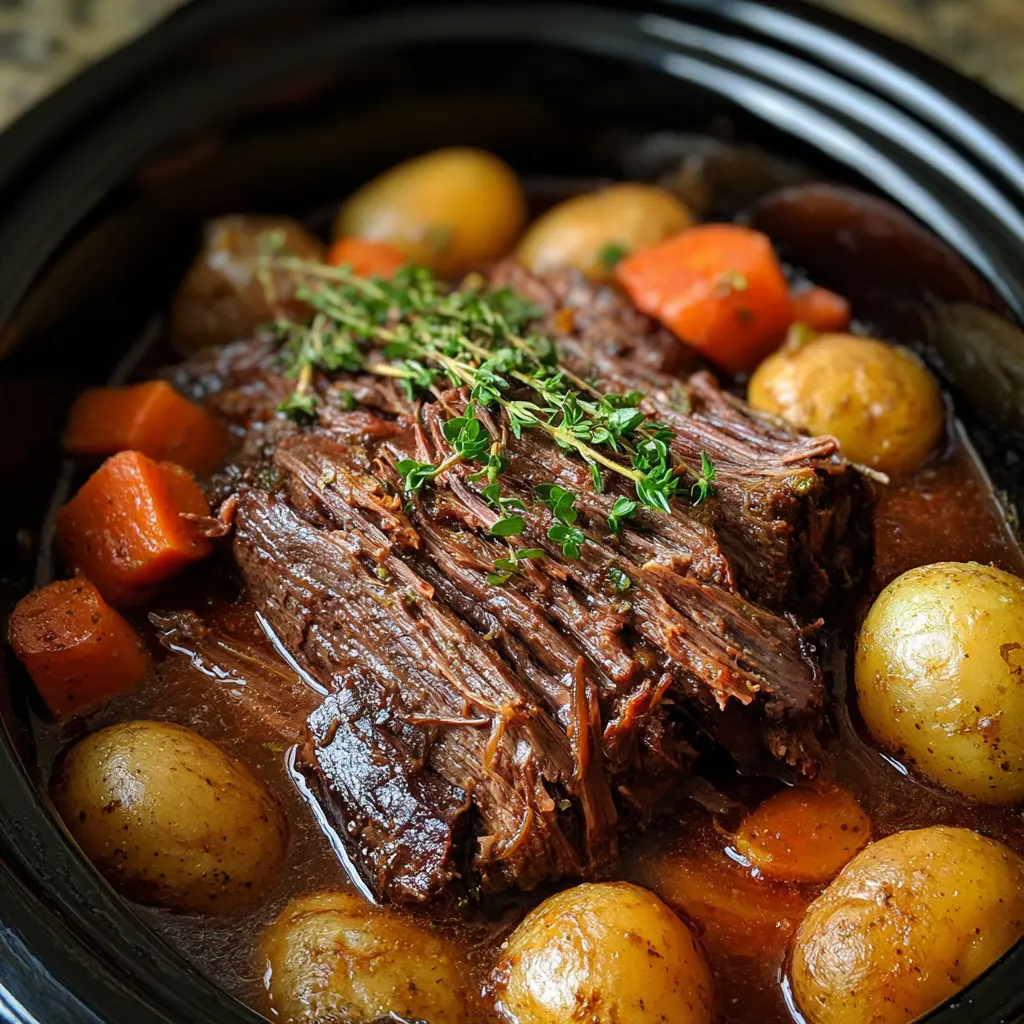
This quintessential Sunday dinner features a tender beef chuck roast slow-braised until it falls apart at the touch of a fork. Surrounded by savory root vegetables and aromatic herbs, it creates its own rich broth as it cooks, delivering a complete, warming meal in one pot.
Why You’ll Love This Recipe
- Set It and Forget It – Once the initial searing is complete, the slow cooker takes over, allowing you to go about your day while dinner cooks itself.
- Budget-Friendly Cut – This recipe utilizes a chuck roast, a tough and affordable cut of meat that transforms into a luxurious, tender main course through long cooking.
- One-Pot Convenience – With the meat, potatoes, and vegetables all cooking together, you have a complete nutritional meal with minimal cleanup.
- Incredible Aromatics – As the beef simmers with garlic, onions, and thyme for hours, it fills your home with a comforting, savory scent.
- Dietary Friendly – This recipe is naturally gluten-free and dairy-free, making it a safe and hearty option for various dietary needs.
- Excellent Leftovers – The flavors deepen as they sit, meaning the roast often tastes even better the next day for lunch or quick dinners.
Ingredients You’ll Need
The Meat
- Beef Chuck Roast (3 lbs) – The gold standard for pot roast; its high fat and connective tissue content melt down to keep the meat juicy.
- Olive Oil (1 tablespoon) – Used to sear the meat, creating a crust that adds depth of flavor.
- Salt (1 teaspoon) & Black Pepper (½ teaspoon) – Essential for seasoning the meat before searing and balancing the broth.
The Vegetables
- Potatoes (1 cup, diced) – Yukon Gold or Russet potatoes work well; cut into large chunks so they hold their shape during the long cook.
- Carrots (1 cup, chopped) – Adds natural sweetness and texture to the savory dish.
- Onion (1, sliced) – Breaks down during cooking to flavor the broth and meat.
- Garlic (3 cloves, minced) – Provides a savory, aromatic backbone to the liquid.
The Braising Liquid & Seasoning
- Beef Broth (4 cups) – Creates the braising environment that keeps the meat moist and distributes heat.
- Dried Thyme (2 teaspoons) – An earthy herb that complements beef and root vegetables perfectly; rosemary can also be used.
Step-by-Step Instructions
Step 1: Sear the Beef
Heat the olive oil in a large skillet or heavy-bottomed pan over medium-high heat. Season the chuck roast generously on all sides with the salt and pepper. Place the meat in the hot pan and sear for 5–7 minutes, turning to ensure a deep brown crust forms on all sides.
Step 2: Prepare the Slow Cooker
Transfer the seared roast directly into the basin of your slow cooker. If your skillet has browned bits (fond) on the bottom, you can splash a little broth in to loosen them and pour that over the meat for extra flavor.
Step 3: Add Vegetables and Liquid
Arrange the diced potatoes, chopped carrots, sliced onion, and minced garlic around and on top of the meat. Sprinkle the dried thyme over everything. Pour the 4 cups of beef broth into the cooker, ensuring the liquid comes up the sides of the meat.
Step 4: The Long Cook
Cover the slow cooker with the lid. Cook on Low for 8 hours. Avoid lifting the lid during cooking, as this releases heat and moisture, which can extend the cooking time. The meat is done when it shreds easily with a fork.
Step 5: Rest and Serve
Carefully remove the roast from the slow cooker and transfer it to a cutting board. Let it rest for 10 minutes to allow the juices to redistribute. Slice or shred the meat and serve it alongside the tender vegetables, ladling the cooking broth over the top.
Recipe Notes & Tips
- Don’t Skip the Sear – Searing the meat triggers the Maillard reaction, creating complex savory flavors that boiling or steaming simply cannot achieve. It is the key to a rich-tasting pot roast.
- Cut Vegetables Uniformly – Ensure your potatoes and carrots are cut into large, uniform chunks (about 1.5 to 2 inches). If they are too small, they will turn into mush during the 8-hour cook.
- Choosing the Right Roast – Look for a chuck roast with good marbling (white flecks of fat). Avoid lean cuts like “round” or “sirloin,” as they will dry out and become tough in the slow cooker.
- Liquid Level – This recipe uses 4 cups of broth, which creates a soupier result. If you prefer a concentrated gravy, you can reduce the liquid to 1-2 cups; the slow cooker traps moisture, so the meat won’t dry out.
- Thickening the Sauce – If you want a thicker gravy instead of broth, whisk 2 tablespoons of cornstarch with 2 tablespoons of cold water and stir it into the boiling liquid in the last 30 minutes of cooking (or transfer liquid to a saucepan and boil with the slurry).
Nutritional Information
- Prep Time: 20 minutes
- Cook Time: 8 hours
- Total Time: 8 hours 20 minutes
- Servings: 6 Servings
- Calories: Approximately 350 kcal per serving

Perfect Pairings
- Crusty Sourdough Bread – Perfect for dipping into the rich, savory beef broth.
- Green Beans Almondine – A crisp, fresh green vegetable contrasts nicely with the soft, slow-cooked root vegetables.
- Red Wine (Cabernet Sauvignon) – A bold, tannic red wine stands up to the rich fatty flavors of the beef.
- Creamy Horseradish Sauce – A dollop of spicy horseradish on the side cuts through the richness of the meat.
Ideal Occasions
- Sunday Family Dinner – The classic time for a pot roast, gathering everyone for a hearty meal before the week starts.
- Cold Winter Evenings – A warming, calorie-dense meal perfect for when the weather is frightful.
- Meal Prep Weeks – The meat can be shredded and stored for sandwiches, tacos, or rice bowls throughout the week.
- Dinner Parties – It serves a crowd comfortably and allows the host to socialize rather than stand over the stove.
Storage & Serving Tips
- Refrigeration – Store leftovers in an airtight container with the juices. It will keep for 3–4 days in the refrigerator.
- Freezing – The beef freezes beautifully for up to 3 months. However, potatoes tend to become mealy when frozen and thawed, so consider eating those first.
- Reheating – Reheat gently in a saucepan on the stove or in a microwave. If the meat seems dry, ensure it is heated in the broth to rehydrate it.
- Fat Separation – After refrigerating, a layer of fat will solidify on top of the broth. You can easily scoop this off before reheating for a lighter dish.
Creative Variations to Try
- Red Wine Braise – Replace 1 cup of the beef broth with a dry red wine (like Merlot or Cabernet) for a deeper, more sophisticated flavor profile.
- Mushroom & Onion – Add 8 oz of sliced mushrooms during the last hour of cooking for an earthy, umami boost.
- Sweet Potato Swap – Substitute the white potatoes with sweet potatoes for a different nutritional profile and a hint of sweetness.
- Herb Garden – Use fresh rosemary and sage sprigs instead of dried thyme for a brighter, more aromatic finish.
Troubleshooting Common Issues
- Tough Meat – If the roast is tough, it simply hasn’t cooked long enough. The collagen needs time to break down. Put the lid back on and give it another hour.
- Mushy Vegetables – This happens if the veggies were cut too small. Keep them chunky. Alternatively, add the vegetables halfway through the cooking time (at the 4-hour mark).
- Bland Flavor – Potatoes soak up a lot of salt. Taste the broth at the end and adjust with salt, pepper, or a splash of Worcestershire sauce or soy sauce for depth.
- Watery Sauce – Slow cookers don’t allow evaporation. If the sauce is too thin, transfer the liquid to a pot and boil it down to reduce, or use a cornstarch slurry.
Why This Recipe Works
This recipe relies on the science of braising tough cuts of meat. A chuck roast contains a significant amount of collagen, a tough connective tissue. When cooked at a low temperature (around 190°F–200°F) over a long period (8 hours), this collagen undergoes hydrolysis and converts into gelatin. This gelatin coats the muscle fibers, giving the meat a silky, moist texture that feels tender even though the muscle fibers themselves have tightened.
The searing step adds a layer of flavor via the Maillard reaction, ensuring the broth tastes like roasted meat rather than boiled meat. The closed environment of the slow cooker ensures that no moisture is lost, basting the vegetables in the beef juices as they soften.
Final Thoughts
The Classic Slow Cooker Pot Roast is the definition of comfort food. It requires minimal effort but delivers a meal that feels home-cooked and full of love. Whether you are feeding a hungry family or preparing meals for the week, this dish offers a reliable, delicious, and nutritious option that never goes out of style.