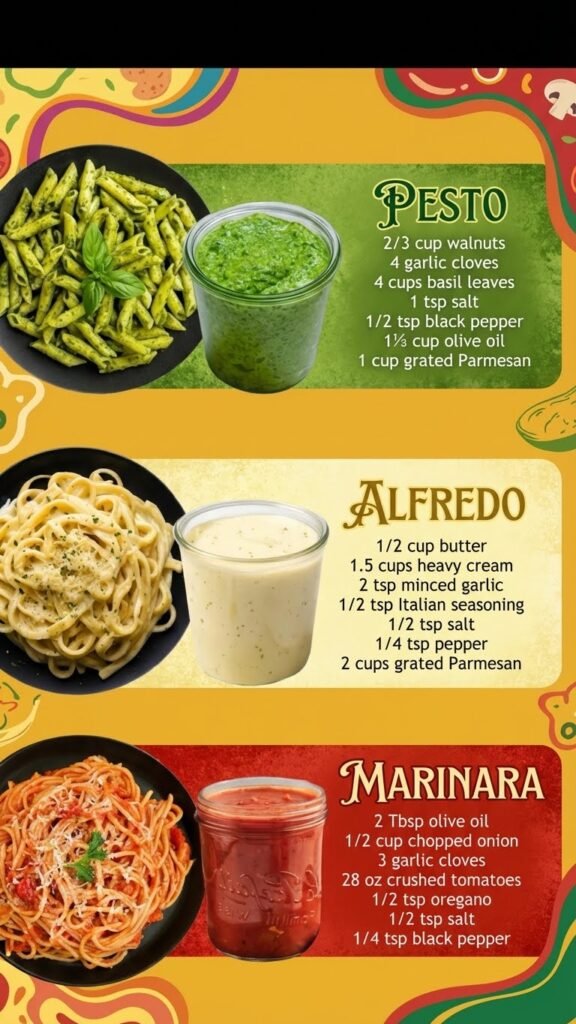
Master these three essential pasta sauces and you’ll never run out of delicious dinner options. From vibrant Basil Pesto to creamy Alfredo and timeless Marinara, each sauce brings its own character to pasta dishes while requiring just a handful of ingredients and simple techniques that anyone can master.
Basil Pesto
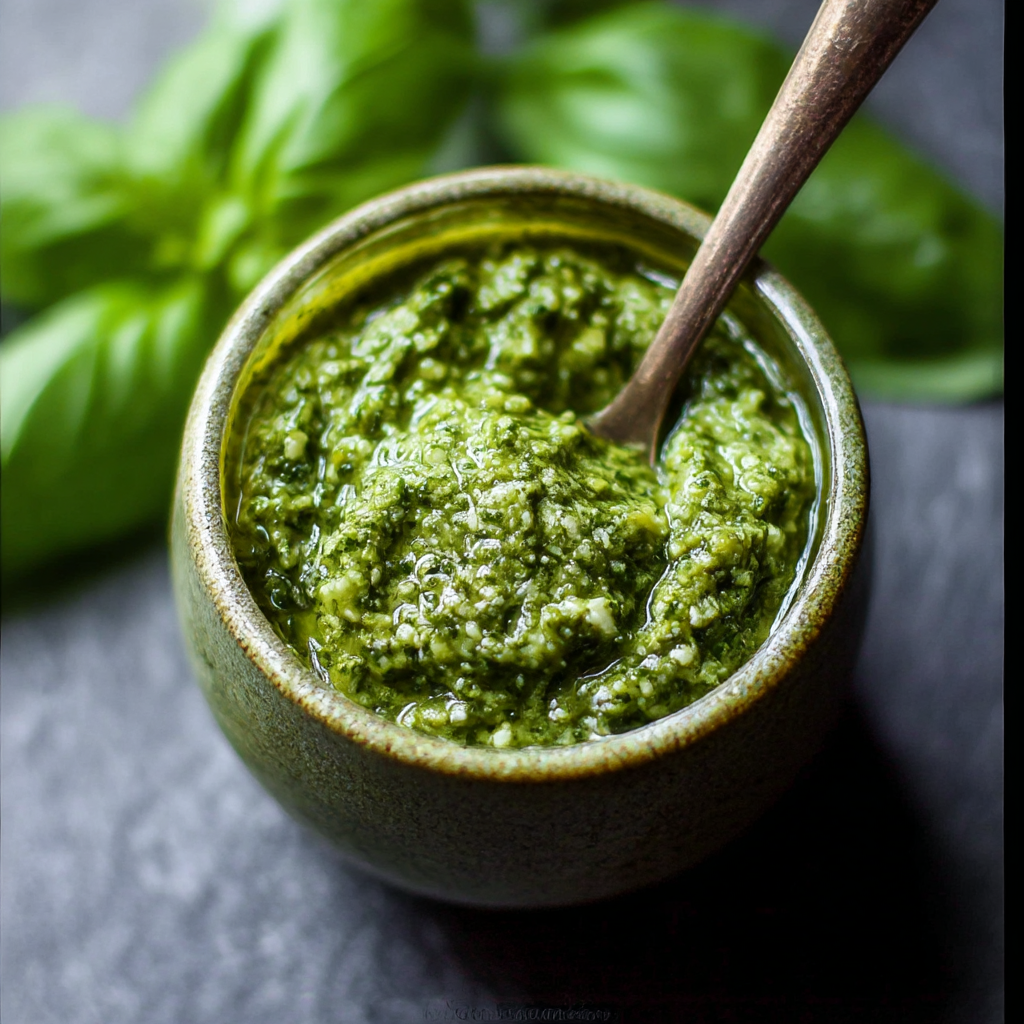
Basil Pesto captures the essence of Italian summer with fresh basil leaves, toasted walnuts, garlic, and Parmesan cheese blended into a vibrant green sauce that clings beautifully to pasta. This no-cook sauce comes together in minutes and delivers bright, herbaceous flavor that transforms simple noodles into something extraordinary.
Why You’ll Love This Recipe
No Cooking Required – This completely raw sauce requires only blending ingredients together, making it perfect for hot summer days when you don’t want to stand over a stove.
Fresh Herb Flavor – The abundance of fresh basil creates an intensely aromatic, garden-fresh taste that can’t be replicated with dried herbs or store-bought versions.
Versatile Applications – Beyond pasta, this pesto enhances sandwiches, pizzas, grilled vegetables, chicken, fish, and works as a flavorful spread or dip for countless applications.
Freezer-Friendly – Make large batches when basil is plentiful and affordable, then freeze in portions for enjoying fresh pesto flavor throughout the year.
Nutrient-Dense – Basil provides antioxidants and vitamins, olive oil delivers healthy fats, and walnuts contribute omega-3 fatty acids for nutritional benefits alongside flavor.
Quick Preparation – From start to finish, this sauce takes just 5-10 minutes to prepare, making it ideal for weeknight dinners when time is limited.
Ingredients You’ll Need
Nut Base:
⅔ cup walnuts (toast if you like) – provides rich, buttery texture and mild nutty flavor that creates the sauce’s body without overpowering the basil
Aromatics:
4 garlic cloves, chopped – adds pungent, sharp flavor that mellows during blending and complements the basil’s sweetness
Herb Component:
4 cups fresh basil leaves, packed – delivers the signature bright green color, aromatic fragrance, and herbaceous flavor that defines pesto
Seasonings:
1 teaspoon salt – enhances all flavors and brings out the basil’s natural sweetness
½ teaspoon black pepper – adds subtle heat and complexity that balances the rich oil and cheese
Liquid Base:
1⅓ cups extra virgin olive oil – creates the smooth, pourable consistency while adding fruity, peppery notes characteristic of quality olive oil
Cheese:
1 cup grated Parmesan – contributes salty, nutty, umami-rich flavor and helps emulsify the sauce into cohesive texture
Step-by-Step Instructions
Process Nuts and Garlic
Place the walnuts and chopped garlic in a food processor or blender and pulse several times until finely chopped into small, uniform pieces that will blend smoothly.
Add Herbs and Seasonings
Add the packed fresh basil leaves, salt, and black pepper to the processor, then blend everything together, scraping down the sides as needed, until the mixture forms a thick, relatively smooth paste.
Incorporate Olive Oil
With the food processor motor running continuously, slowly drizzle in the extra virgin olive oil in a thin, steady stream, allowing it to emulsify with the basil mixture until the sauce becomes smooth and reaches your desired consistency.
Blend in Cheese
Add the grated Parmesan cheese to the processor and blend for 1 more minute until the cheese fully incorporates and the pesto reaches its final creamy, cohesive texture.
Serve or Store
Use the pesto immediately by tossing with hot pasta, or transfer to an airtight container, pressing plastic wrap directly onto the surface to prevent oxidation and browning, then refrigerate or freeze for later use.
Recipe Notes & Tips
Toasting Walnuts – Toasting walnuts in a dry skillet over medium heat for 3-5 minutes enhances their flavor significantly, adding depth and eliminating any raw taste.
Basil Preparation – Pack basil leaves into the measuring cup firmly but don’t crush them, and remove any thick stems that could create bitter, woody flavors.
Preventing Browning – Press plastic wrap directly onto the pesto surface before refrigerating to minimize air exposure that causes oxidation and darkening.
Oil Quality – Use high-quality extra virgin olive oil for best flavor, as it’s a primary component that significantly impacts the final taste.
Consistency Control – Adjust the amount of olive oil based on your preference, using less for thicker pesto that clings to pasta or more for a thinner sauce.
Nut Alternatives – Substitute pine nuts for traditional Genoese pesto, or use almonds or cashews for different flavor profiles and to accommodate preferences.
Nutritional Information
Prep Time: 10 minutes
Cook Time: 0 minutes
Total Time: 10 minutes
Yield: 2-3 cups (enough for 1-1½ pounds of pasta)
Calories: Approximately 120-150 calories per 2-tablespoon serving
Perfect Pairings
Pasta Shapes – Toss with linguine, spaghetti, penne, or fusilli where the sauce can coat strands or nestle into crevices for maximum flavor in every bite.
Grilled Chicken – Serve as a sauce over grilled chicken breasts or use as a marinade before cooking for herbaceous flavor that complements the meat.
Roasted Vegetables – Drizzle over roasted zucchini, tomatoes, eggplant, or bell peppers to enhance vegetables with vibrant herb flavor and richness.
Bruschetta Topping – Spread on toasted bread slices and top with diced tomatoes and fresh mozzarella for an elegant appetizer or light meal.
Ideal Occasions
Summer Entertaining – This no-cook sauce shines during warm weather when you want impressive flavors without heating up the kitchen.
Quick Weeknight Dinners – Prepare in the time it takes pasta water to boil, creating restaurant-quality meals on busy evenings with minimal effort.
Meal Prep Sessions – Make large batches to portion and freeze, ensuring you always have homemade sauce available for quick, flavorful meals.
Garden Harvest Use – Transform abundant basil harvests into preserved sauce that captures summer’s flavor for enjoying throughout the year.
Storage & Serving Tips
Refrigerator Storage – Store in an airtight container with plastic wrap pressed against the surface for up to 1 week in the refrigerator.
Freezer Storage – Freeze in ice cube trays for individual portions, or in small containers with a thin layer of olive oil on top, for up to 6 months.
Serving with Pasta – Reserve ½ cup pasta cooking water before draining, then thin pesto with this starchy water to help it coat noodles perfectly.
Preventing Discoloration – A thin layer of olive oil poured over the pesto surface before storing creates a barrier that prevents oxidation and browning.
Creative Variations to Try
Arugula Pesto – Replace half the basil with peppery arugula for a spicier, more complex flavor profile with additional bite.
Spinach Pesto – Substitute baby spinach for some basil to create a milder, more affordable version that’s still vibrant and delicious.
Sun-Dried Tomato Pesto – Add ¼ cup oil-packed sun-dried tomatoes for sweet-tart flavor and deeper red-orange color.
Lemon Pesto – Include the zest of one lemon and a tablespoon of juice for bright, citrusy notes that lighten the richness.
Troubleshooting Common Issues
Pesto too thick – Thin with additional olive oil or pasta cooking water, adding gradually while blending until you reach desired consistency.
Sauce turning brown – This oxidation is natural but can be minimized by adding a squeeze of lemon juice and storing with plastic wrap touching the surface.
Too much garlic bite – Raw garlic can be intense; reduce the amount or blanch cloves briefly in boiling water before adding to mellow the flavor.
Sauce separating – The oil and solids naturally separate during storage; simply stir thoroughly before using to re-emulsify the mixture.
Why This Recipe Works
Basil Pesto succeeds because the blending process breaks down basil’s cell walls, releasing aromatic essential oils that combine with olive oil to create intense flavor throughout. Walnuts provide healthy fats and proteins that emulsify with the oil, creating creamy body without dairy beyond the Parmesan. The cheese contributes both flavor and additional emulsification through its proteins and fats, helping bind water-based ingredients from the herbs with the fat-based olive oil. Processing garlic with nuts first prevents it from becoming too finely minced, which would create overpowering sharpness, while still distributing its flavor evenly. Adding oil slowly with the motor running creates a stable emulsion rather than a separated mixture of oil floating on herb paste. The high ratio of olive oil acts as a preservative, creating an environment inhospitable to bacterial growth when properly stored. Salt draws out moisture from basil leaves, intensifying their flavor and helping them break down more easily during processing.
Final Thoughts
Basil Pesto represents one of Italian cuisine’s most perfect sauces—simple ingredients transformed through minimal processing into something far greater than the sum of its parts. The no-cook preparation makes it accessible even for novice cooks while the fresh, vibrant flavors impress experienced food enthusiasts. Making pesto from scratch costs less than purchasing pre-made versions while delivering incomparably better flavor and the satisfaction of creating something authentic and delicious. The versatility extends this sauce’s value far beyond pasta, making it a kitchen staple worth mastering for countless culinary applications.
Alfredo Sauce
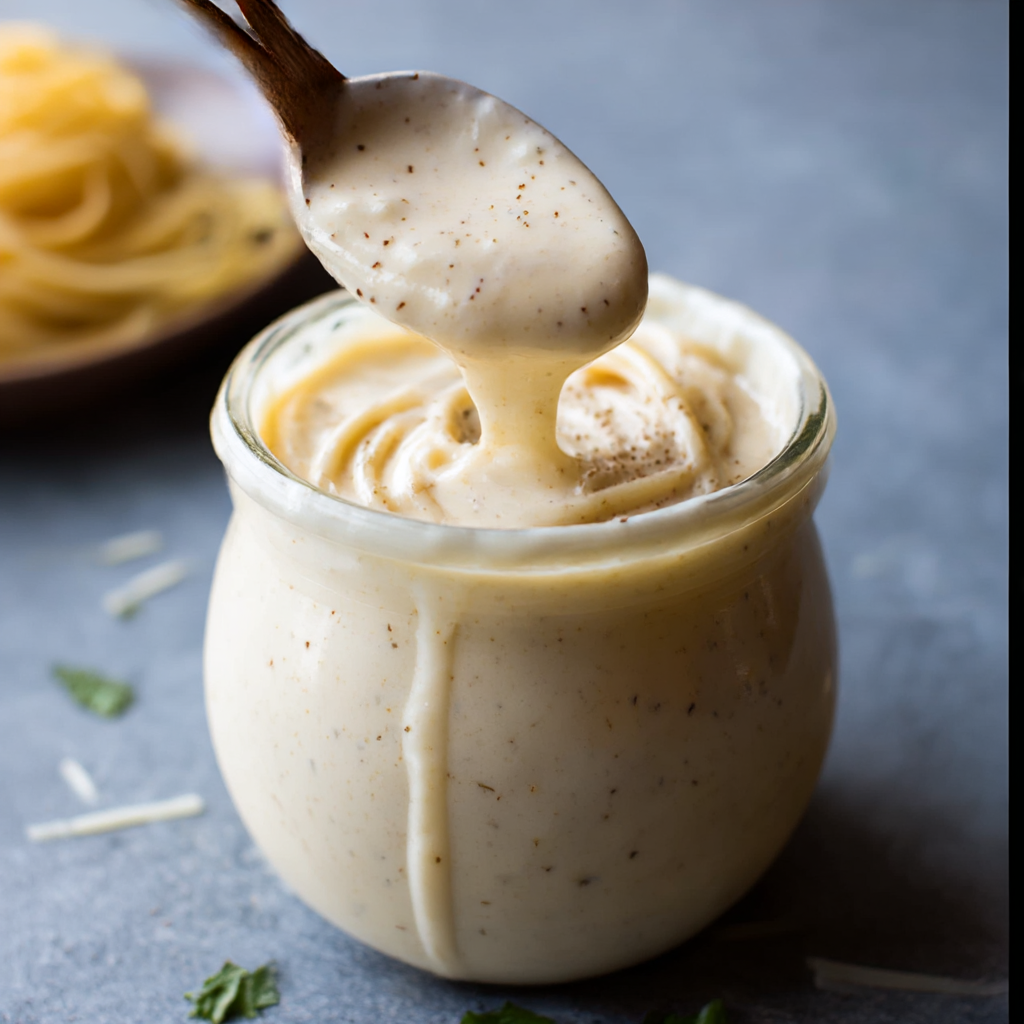
Alfredo Sauce combines butter, heavy cream, garlic, and Parmesan cheese into a luxuriously creamy, rich sauce that coats pasta in velvety smoothness. This indulgent sauce requires just minutes to prepare but delivers restaurant-quality results that satisfy cravings for comfort food at its finest.
Why You’ll Love This Recipe
Restaurant Quality – This homemade version rivals or exceeds anything you’d get at Italian restaurants, proving that impressive results don’t require professional training.
Quick Preparation – Ready in under 10 minutes from start to finish, this sauce fits easily into weeknight dinner rotations despite its luxurious taste and texture.
Rich and Creamy – The combination of butter, cream, and Parmesan creates an indulgent sauce that feels like a special treat every time you serve it.
Simple Ingredients – With just six basic ingredients you likely have on hand, you can create this classic sauce without special shopping trips.
No Flour Required – Unlike roux-based sauces, this Alfredo relies on reduction and cheese for thickening, creating silkier texture without any raw flour taste.
Easily Scaled – Double or triple the recipe effortlessly to serve crowds, as the proportions remain consistent regardless of batch size.
Ingredients You’ll Need
Fat Base:
½ cup butter – provides rich, creamy foundation and carries flavors while adding characteristic silky mouthfeel
Cream Component:
1½ cups heavy cream – creates the luxurious, velvety texture and adds richness that defines authentic Alfredo sauce
Aromatics:
2 teaspoons minced garlic – contributes savory depth and aromatic complexity without overwhelming the delicate cream and cheese
Seasonings:
½ teaspoon Italian seasoning – adds subtle herb notes from basil, oregano, and other Mediterranean flavors
½ teaspoon salt – enhances all flavors and brings out the natural sweetness of cream and nuttiness of cheese
¼ teaspoon pepper – provides gentle heat and complexity that balances the richness
Cheese:
2 cups grated Parmesan – delivers salty, nutty, umami flavor while thickening the sauce and creating signature Alfredo taste
Step-by-Step Instructions
Melt Butter and Cream
Place the butter and heavy cream together in a large skillet or saucepan over low heat, allowing them to melt and warm together for approximately 2 minutes until the butter fully incorporates into the cream.
Add Seasonings
Whisk in the minced garlic, Italian seasoning, salt, and pepper, continuing to cook over low heat for 1 minute while whisking to distribute the seasonings evenly and allow the garlic to become fragrant without browning.
Incorporate Cheese
Add the grated Parmesan cheese to the warm cream mixture and whisk continuously until the cheese melts completely and blends smoothly into the sauce, creating a cohesive, creamy consistency without lumps.
Serve Immediately
Remove the sauce from heat as soon as the cheese melts and serve immediately while warm and creamy, tossing with freshly cooked, drained pasta for best results.
Recipe Notes & Tips
Low Heat Essential – Keep heat consistently low throughout cooking to prevent the cream from breaking or the cheese from becoming stringy and grainy.
Fresh Parmesan – Use freshly grated Parmesan rather than pre-grated varieties, which contain anti-caking agents that prevent smooth melting and create grainy texture.
Continuous Whisking – Whisk constantly once cheese is added to ensure even melting and prevent clumping or separation of fats from solids.
Immediate Serving – Alfredo sauce is best served right away, as it thickens considerably upon cooling and reheating never quite restores the original silky texture.
Pasta Water Addition – If sauce becomes too thick, thin with reserved pasta cooking water, which helps it coat noodles better while maintaining creamy consistency.
Quality Ingredients – Since this sauce relies on so few components, use the best quality butter, cream, and Parmesan you can afford for superior flavor.
Nutritional Information
Prep Time: 2 minutes
Cook Time: 5 minutes
Total Time: 7 minutes
Yield: 2-3 cups (enough for 1 pound of pasta)
Calories: Approximately 200-250 calories per ¼-cup serving
Perfect Pairings
Fettuccine – The traditional pasta pairing, these wide, flat noodles provide maximum surface area for the creamy sauce to coat.
Grilled Chicken – Serve over sliced grilled chicken breast for the classic Chicken Alfredo that’s become an Italian-American staple.
Steamed Broccoli – Add tender-crisp broccoli florets to create a more balanced meal with vegetables and beautiful green color contrast.
Garlic Bread – Serve alongside warm, buttery garlic bread for soaking up extra sauce and completing the indulgent meal.
Ideal Occasions
Date Night Dinners – This elegant sauce creates restaurant-quality meals at home that feel romantic and special without requiring hours of preparation.
Comfort Food Cravings – Turn to this rich, creamy sauce when you need the ultimate comfort food that soothes and satisfies completely.
Quick Entertaining – Prepare for last-minute guests who deserve something impressive, as the short cooking time allows preparation after guests arrive.
Special Weeknight Treats – Elevate ordinary Tuesday into something special with this simple but luxurious sauce that makes any evening feel like a celebration.
Storage & Serving Tips
Limited Storage – Alfredo sauce doesn’t store particularly well, as the cream and cheese separate and become grainy when reheated, so make only what you’ll use.
Refrigerator Storage – If you must store leftovers, refrigerate in an airtight container for up to 2 days, though texture will suffer significantly.
Gentle Reheating – Warm leftovers over very low heat while stirring constantly, adding cream or milk gradually to restore consistency, though it won’t match fresh.
Pasta Water Secret – Always reserve pasta cooking water before draining, as this starchy liquid helps thin sauce and improves its ability to cling to noodles.
Creative Variations to Try
Cajun Alfredo – Add Cajun seasoning, paprika, and cayenne pepper for a spicy twist that transforms the classic into something bold and exciting.
Mushroom Alfredo – Sauté sliced mushrooms in butter before adding cream for earthy flavor and additional substance throughout the sauce.
Seafood Alfredo – Toss with cooked shrimp, scallops, or crab meat for luxurious seafood pasta that feels special-occasion worthy.
Lightened Version – Replace half the heavy cream with whole milk and reduce butter slightly for a less rich but still satisfying variation.
Troubleshooting Common Issues
Sauce too thin – Continue simmering gently to reduce and thicken, or add more Parmesan cheese gradually while whisking until desired consistency is reached.
Grainy texture – This happens from too much heat or pre-grated cheese; remove from heat immediately and whisk vigorously, adding a splash of cream to smooth.
Sauce breaking – If fats separate from solids, remove from heat and whisk in a tablespoon of cold cream to re-emulsify and restore smooth texture.
Garlic too strong – Raw garlic can be overpowering; reduce the amount or cook it slightly longer in the butter before adding cream to mellow its intensity.
Why This Recipe Works
Alfredo Sauce succeeds through the emulsification of butter and cream fats with water from the cream and proteins from Parmesan cheese. Starting with low heat prevents the cream from breaking, which occurs when proteins coagulate from excessive temperature and squeeze out fats, creating separation. Butter adds richness while its milk solids contribute additional emulsifiers that help bind the sauce together. Heavy cream’s high fat content creates luxurious mouthfeel while providing enough liquid to create a sauce rather than a paste. Parmesan cheese contributes three crucial elements: salty-nutty flavor, thickening power from its proteins, and additional emulsification from its fats. Whisking while adding cheese ensures even distribution before proteins can clump together, creating smooth texture throughout. The small amount of garlic and Italian seasoning adds complexity without overwhelming the delicate cream and cheese flavors that define authentic Alfredo. At 200-250 calories per serving, this sauce is certainly indulgent, making it best enjoyed in moderation as a special treat rather than everyday fare.
Final Thoughts
Alfredo Sauce demonstrates how simple ingredients can create extraordinary results when handled with proper technique and quality components. The speed of preparation makes this sauce surprisingly practical for weeknight dinners despite its luxurious reputation and rich flavor. Making Alfredo from scratch costs less than jarred versions while delivering incomparably better taste and texture that transforms simple pasta into something restaurant-worthy. While certainly rich and indulgent, the sauce provides calcium from the dairy and can be portioned reasonably when served over pasta with vegetables or protein for a more balanced meal. The comfort and satisfaction this sauce delivers make it a valuable recipe to master for those occasions when you need something that feels like a warm, creamy hug in culinary form.
Marinara Sauce
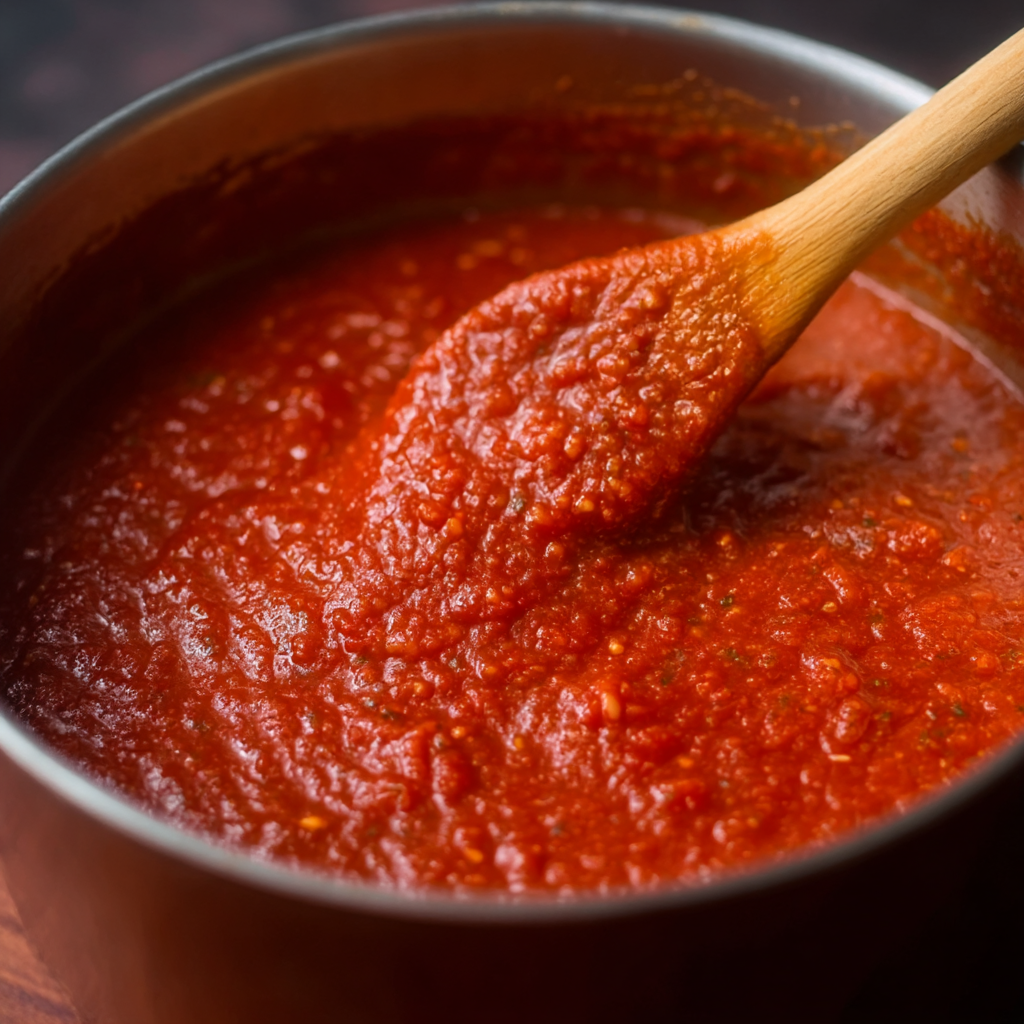
Marinara Sauce combines crushed tomatoes, garlic, onions, and herbs into a versatile, flavorful base that enhances pasta, pizza, and countless other Italian dishes. This simple, chunky sauce develops rich tomato flavor through brief simmering that concentrates taste without requiring hours of cooking time.
Why You’ll Love This Recipe
Quick Preparation – Ready in just 20 minutes from start to finish, this sauce provides homemade quality on busy evenings without extended cooking time.
Versatile Applications – Beyond pasta, this marinara enhances pizza, lasagna, chicken Parmesan, meatballs, and serves as a dipping sauce for breadsticks or appetizers.
Simple, Clean Ingredients – Just tomatoes, olive oil, onions, garlic, and herbs create authentic Italian flavor without processed ingredients or preservatives.
Budget-Friendly – Canned tomatoes and pantry staples make this sauce economical for feeding families without sacrificing quality or taste.
Healthier Option – Lower in calories and fat than cream-based sauces, marinara provides tomato nutrients including lycopene and vitamin C.
Makes Large Batches – Doubles or triples easily for batch cooking, allowing you to freeze portions for future quick meals whenever needed.
Ingredients You’ll Need
Fat Base:
2 tablespoons olive oil – provides the cooking medium for aromatics while adding fruity, peppery notes characteristic of Italian cuisine
Aromatics:
½ cup chopped onion – adds sweet, savory depth that builds the flavor foundation and balances tomato acidity
3 garlic cloves, minced – contributes pungent, aromatic complexity that enhances the tomatoes and defines Italian character
Tomato Base:
28-ounce can crushed tomatoes – provides the primary ingredient with concentrated tomato flavor and chunky texture that creates substance
Seasonings:
½ teaspoon dried oregano – delivers classic Italian herb flavor with earthy, slightly bitter notes that complement tomatoes perfectly
½ teaspoon salt – enhances all flavors and brings out the natural sweetness in tomatoes while balancing acidity
¼ teaspoon black pepper – adds subtle heat and complexity that rounds out the flavor profile
Optional Finishing:
Fresh basil leaves – contributes bright, aromatic freshness that elevates the sauce with garden-fresh flavor just before serving
Step-by-Step Instructions
Sauté Aromatics
Heat the olive oil in a large saucepan or skillet over medium heat, then add the chopped onion and cook while stirring occasionally for approximately 5 minutes until the onion softens and becomes translucent without browning.
Add Garlic
Stir in the minced garlic and continue cooking for 1 minute while stirring constantly, allowing it to become fragrant and slightly softened without burning or turning bitter.
Combine Tomatoes and Seasonings
Add the crushed tomatoes with their juice, dried oregano, salt, and black pepper to the pan, stirring everything together to combine evenly and distribute the seasonings throughout the tomato base.
Simmer to Develop Flavor
Bring the sauce to a gentle simmer, then reduce heat to maintain a steady, gentle bubble and cook uncovered for 15 minutes, stirring occasionally, allowing flavors to meld and the sauce to thicken slightly through reduction.
Finish with Fresh Herbs
If using fresh basil, tear or chop the leaves and stir them into the sauce, then immediately turn off the heat to preserve the basil’s bright flavor and aromatic qualities.
Serve or Store
Use the sauce immediately by tossing with cooked pasta, or allow it to cool completely before transferring to airtight containers for refrigeration or freezing.
Recipe Notes & Tips
Tomato Selection – Use quality canned crushed tomatoes from San Marzano or similar varieties for best flavor and natural sweetness that requires less added sugar.
Onion Preparation – Finely chop onions so they break down and incorporate into the sauce rather than remaining in large, distinct pieces.
Garlic Timing – Add garlic after onions soften to prevent burning, which creates bitter flavor that ruins the sauce’s taste.
Fresh vs. Dried Basil – Fresh basil added at the end provides superior flavor compared to dried basil cooked throughout, which becomes dull and bitter.
Consistency Control – For thicker sauce, simmer longer uncovered; for thinner, add a splash of water or pasta cooking liquid.
Sugar Addition – If tomatoes taste acidic, add ½ teaspoon sugar to balance without making the sauce overtly sweet.
Nutritional Information
Prep Time: 5 minutes
Cook Time: 20 minutes (5 minutes sautéing, 15 minutes simmering)
Total Time: 25 minutes
Yield: 2-3 cups (enough for 1 pound of pasta)
Calories: Approximately 45-60 calories per ½-cup serving
Perfect Pairings
Spaghetti – The classic pairing, long strands capture sauce beautifully while maintaining the simplicity that lets marinara’s flavor shine.
Meatballs – Simmer homemade or store-bought meatballs directly in the sauce for a hearty, satisfying meal with Italian-American flair.
Chicken Parmesan – Use as the tomato base for this classic dish, spooning over breaded chicken and topping with mozzarella cheese.
Pizza Base – Spread on pizza dough for a flavorful foundation that’s better than any jar sauce and costs pennies to make.
Ideal Occasions
Weeknight Dinners – This quick sauce makes regular pasta night feel special without requiring significant time or effort from busy cooks.
Meal Prep Sessions – Make large batches to portion and freeze, creating convenient, homemade sauce available anytime for quick, healthy dinners.
Kid-Friendly Meals – The familiar tomato flavor appeals to children while introducing them to homemade food that’s healthier than jarred alternatives.
Budget-Conscious Cooking – Stretch grocery dollars with this inexpensive sauce that transforms affordable pasta into satisfying meals for families.
Storage & Serving Tips
Refrigerator Storage – Store in an airtight container in the refrigerator for up to 5 days, improving in flavor as it sits and seasonings continue melding.
Freezer Storage – Freeze in portions for up to 6 months in freezer-safe containers or heavy-duty bags, labeling with the date for easy identification.
Thawing Instructions – Defrost overnight in the refrigerator for best results, or reheat gently from frozen in a saucepan, stirring frequently.
Reheating Methods – Warm on the stovetop over medium heat until heated through, or microwave individual portions, stirring halfway through heating.
Creative Variations to Try
Arrabbiata – Add ½ teaspoon crushed red pepper flakes with the garlic for a spicy version that brings heat alongside tomato flavor.
Puttanesca – Stir in capers, olives, and anchovies during simmering for a briny, complex sauce with bold Mediterranean character.
Vodka Sauce – Add ¼ cup heavy cream and a splash of tomato paste after simmering for a creamy, pink sauce that’s rich but lighter than Alfredo.
Mushroom Marinara – Sauté sliced mushrooms with the onions for earthy depth and meaty texture that makes the sauce more substantial.
Troubleshooting Common Issues
Sauce too acidic – Balance with a pinch of sugar or a small piece of carrot simmered in the sauce, which absorbs acidity naturally.
Too watery – Continue simmering uncovered to evaporate excess liquid and concentrate flavors until you reach desired thickness.
Garlic overpowering – This happens from burning or using too much; reduce quantity or cook more briefly, and consider using garlic powder instead for milder flavor.
Lacking depth – Boost flavor with a splash of balsamic vinegar, a pat of butter stirred in at the end, or a Parmesan rind simmered with the sauce.
Why This Recipe Works
Marinara Sauce succeeds through the synergy of properly cooked aromatics, quality tomatoes, and appropriate simmering that concentrates flavors without overcooking. Sautéing onions until translucent develops their natural sugars through caramelization while softening their texture so they integrate into the sauce. Adding garlic later prevents burning while still allowing enough cooking time to mellow its raw sharpness. Crushed tomatoes provide ideal texture—smoother than diced but with more body than tomato sauce—creating substance that clings to pasta. Brief simmering allows the water content to evaporate slightly, concentrating tomato flavor while giving time for dried oregano to hydrate and bloom. Salt enhances tomatoes’ natural sweetness while reducing perceived acidity, creating better balanced flavor. Adding fresh basil off-heat preserves its bright, aromatic essential oils that would dissipate with prolonged cooking. The olive oil provides fat that carries flavor compounds and creates a satisfying mouthfeel despite the sauce’s relatively low fat content. At 45-60 calories per serving, marinara offers satisfying flavor with minimal calories, making it appropriate for regular consumption even for those watching their intake.
Final Thoughts
Marinara Sauce represents Italian cooking at its finest—simple ingredients treated with proper technique to create something far greater than the sum of its parts. The quick preparation time makes this sauce practical for regular weeknight cooking rather than relegating it to special occasions. Making marinara from scratch costs significantly less than purchasing jarred versions while delivering incomparably fresher flavor and allowing complete control over ingredients and seasonings. The versatility extends this sauce’s value far beyond pasta, making it a true kitchen workhorse that enhances countless dishes across Italian and Italian-American cuisine. While simple and humble, a well-made marinara provides the foundation for memorable meals that satisfy both physically and emotionally, proving that sometimes the most basic recipes are also the most essential.
Final Thoughts on the Sauce Collection
These three classic Italian sauces—Basil Pesto, Alfredo, and Marinara—form the foundation of endless pasta nights and countless other Italian-inspired dishes. Together, they represent the spectrum of Italian sauce-making: bright and herbaceous pesto, rich and creamy Alfredo, and versatile tomato-based marinara. Mastering all three ensures you’ll never run out of delicious dinner options, as each brings distinct character, technique, and flavor profile to your culinary repertoire.
The beauty of these sauces lies in their accessibility—none requires professional training or hard-to-find ingredients, yet all deliver restaurant-quality results when prepared with attention to detail and quality components. From pesto’s no-cook simplicity to Alfredo’s luxurious creaminess to marinara’s quick-simmering development, each sauce teaches different fundamental techniques that improve your overall cooking skills.
The nutritional diversity allows choosing appropriate sauces for different occasions and dietary needs. Marinara provides light, healthier option suitable for regular consumption, while Alfredo offers indulgent satisfaction for special treats. Pesto falls somewhere in between, delivering healthy fats alongside intense flavor. This variety ensures pasta night never becomes monotonous, as you can rotate through different flavor profiles to match moods, seasons, and occasions.
Which sauce will you twirl with your pasta tonight? The answer might depend on what’s in your garden, what’s in your refrigerator, or simply what your soul craves. The beauty of having all three recipes at your fingertips is the freedom to choose based on the moment, knowing that delicious, satisfying dinner is just minutes away regardless of which direction you turn.