These smoked beef and cheese sliders deliver maximum flavor by slow-smoking a chuck roast until fall-apart tender, then shredding it and piling it onto sweet Hawaiian buns with layers of sharp cheddar cheese, caramelized onions, and BBQ sauce before baking until the cheese melts into gooey perfection. The technique involves the classic low-and-slow smoking method with regular spritzing to keep the meat moist, wrapping at the right moment to push through the stall, then resting properly before shredding and assembling into impressive slider form that feeds a crowd. With their combination of smoky beef, tangy BBQ sauce, melted cheese, and soft sweet buns, these sliders transform a single chuck roast into party-worthy food that generates genuine excitement and disappears quickly from any gathering where they appear.
Why You’ll Love This Recipe
Low-and-Slow Perfection – Seven hours of smoking transforms tough chuck roast into incredibly tender, flavorful beef that shreds easily and absorbs smoke beautifully throughout.
Crowd-Feeding Efficiency – A single 3-pound roast yields approximately 12-15 sliders, making this practical for feeding parties without breaking the budget.
Built-In Rest Period – The 2-hour cooler rest is mandatory for proper texture, which actually helps with party timing by allowing you to smoke earlier and assemble when ready.
Hawaiian Bun Magic – Sweet slider buns provide the perfect contrast to smoky, savory beef while their soft texture and slight sweetness appeal to everyone.
Layered Flavor Complexity – Smoke, spice rub, beef broth spritz, BBQ sauce, sharp cheddar, and caramelized onions create multiple flavor dimensions in every bite.
Make-Ahead Friendly – Smoke the beef a day ahead, refrigerate, then simply assemble and bake the sliders when ready to serve for stress-free entertaining.
Ingredients You’ll Need
For the Smoked Chuck Roast
3 pound chuck roast – Provides the protein foundation with excellent marbling that keeps the meat moist during extended smoking while developing deep beefy flavor.
4 tablespoons SPG (salt, black pepper, garlic powder blend) – Creates the classic barbecue seasoning rub that enhances the beef without overpowering its natural flavor or the smoke.
1 cup beef broth – Forms the spritzing liquid that keeps the surface moist during smoking, though the recipe mentions using barrel-aged beer for additional flavor.
For the Slider Assembly
2 packages sweet slider buns – Supplies the soft, slightly sweet bread that contrasts beautifully with savory beef while providing the handheld format.
8 slices sharp cheddar cheese – Delivers tangy, assertive cheese flavor that stands up to the smoky beef while melting into gooey perfection.
½ cup BBQ sauce – Adds tangy-sweet moisture and classic barbecue flavor that ties all the components together.
1 large white onion – Provides sweet, caramelized flavor when fried that adds another layer of complexity and textural interest.
Garlic butter (for brushing buns) – Creates golden, flavorful tops on the sliders while adding rich garlic notes that enhance the overall experience.
Step-by-Step Instructions
Prepare Smoker and Season Roast Preheat your smoker to 275°F, setting it up with hickory wood for bold, assertive smoke flavor that complements beef beautifully. Pat the chuck roast completely dry with paper towels, then season all sides generously with the SPG blend (mixing equal parts salt, black pepper, and garlic powder if making your own), pressing the seasonings into the meat so they adhere properly.
Smoke the Chuck Roast Place the seasoned chuck roast directly on the smoker grate at 275°F and smoke for 5 hours, spritzing the surface every hour with beef broth or barrel-aged beer to keep it moist and promote smoke adhesion. The regular spritzing also helps develop the bark—the flavorful, darkened crust on the exterior.
Wrap and Continue Cooking After 5 hours, when the roast has developed good bark and color, wrap it tightly in heavy-duty aluminum foil to create a sealed packet. This Texas crutch method helps push through the stall (when evaporative cooling prevents temperature rise) and speeds up the final cooking while keeping the meat moist. Place the wrapped roast back on the smoker for an additional 2 hours.
Check for Doneness After the additional 2 hours in foil, check the internal temperature with a meat thermometer—it should read 205°F. More importantly, test for probe tenderness by inserting the thermometer probe or a skewer; it should slide through the meat with no resistance, like pushing through room-temperature butter.
Rest in Cooler Once the roast reaches proper temperature and tenderness, remove it from the smoker while still wrapped in foil. Place it in an insulated cooler (without ice) and close the lid, letting it rest for 2 hours. This extended rest allows the muscle fibers to relax and reabsorb juices while the residual heat continues gently breaking down connective tissue.
Caramelize the Onions While the beef rests (or at any convenient time), thinly slice the white onion into half-moons. Heat a pan over medium heat with avocado oil or your preferred cooking oil, then add the sliced onions and cook for 5-7 minutes, stirring occasionally, until they soften and begin to caramelize with light golden edges.
Shred the Beef After the 2-hour rest, remove the roast from the cooler and unwrap the foil, saving any accumulated juices. Use two forks or meat claws to shred the beef into bite-sized pieces, mixing the reserved juices back into the shredded meat to keep it moist and flavorful.
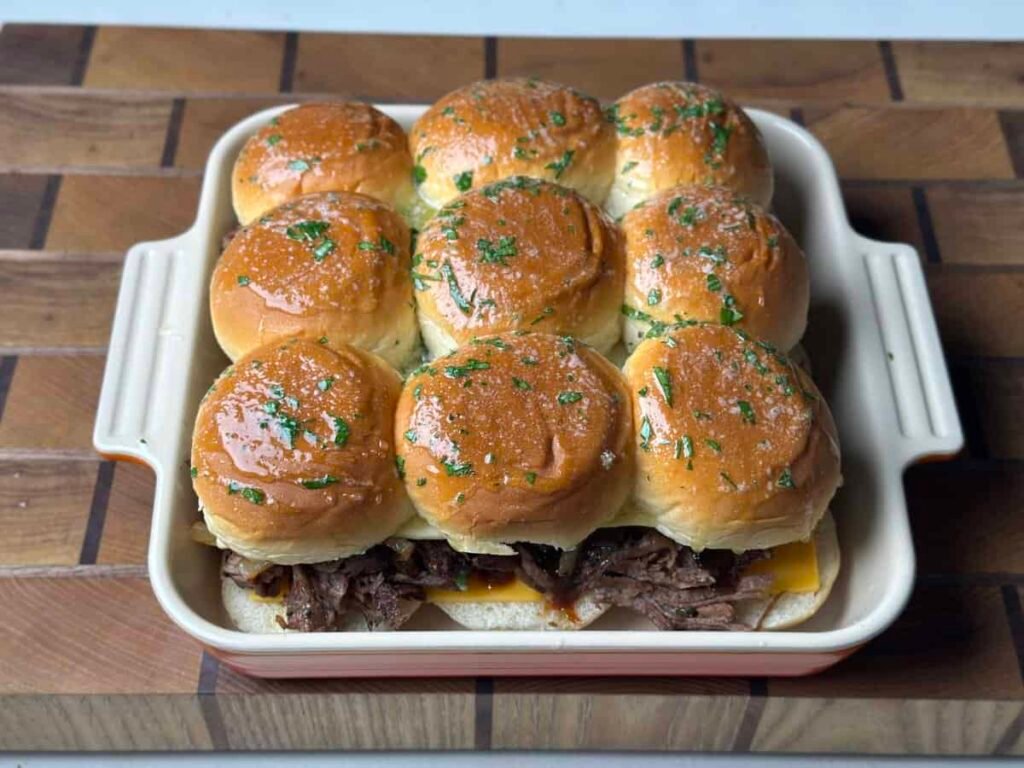
Assemble the Sliders Preheat your oven to 350°F. Place the bottom halves of the slider buns in a large aluminum foil pan or baking dish. Layer 4 slices of sharp cheddar cheese over the buns, then add the shredded smoked beef evenly across all the buns. Drizzle the BBQ sauce over the beef, then distribute the caramelized onions on top. Add the remaining 4 slices of cheese, then place the top buns over everything and brush with melted garlic butter.
Bake Until Melted Place the assembled sliders in the preheated 350°F oven and bake for 15-20 minutes until the cheese melts completely, the beef heats through, and the tops turn golden from the garlic butter. The sliders should be hot throughout with the cheese melted and slightly oozing out the sides.
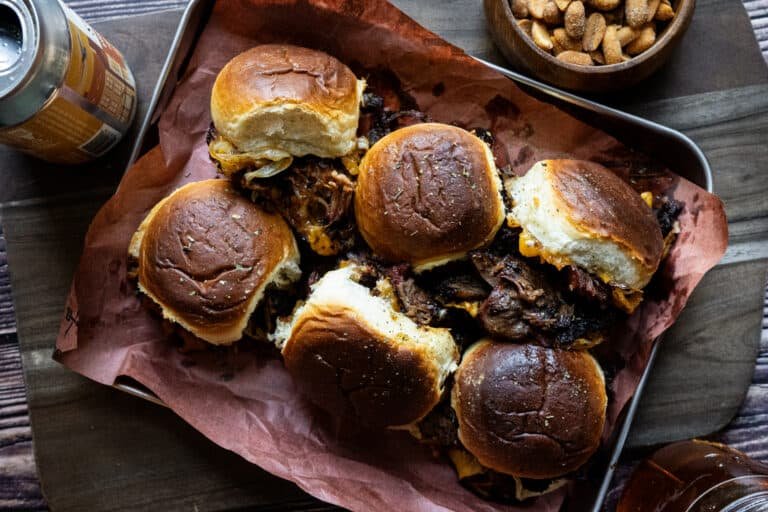
Slice and Serve Remove the pan from the oven and let it rest for 2-3 minutes, then use a sharp knife to slice through the individual sliders where the buns naturally separate. Serve immediately while hot, providing napkins generously as these are deliciously messy to eat.
Recipe Notes & Tips
Wood Choice Matters – Hickory provides bold smoke flavor; substitute oak for milder smokiness or mesquite for even more assertive character.
Spritzing Liquid Options – Beef broth, beer, apple juice, or even water all work; the primary goal is moisture, though flavorful liquids add subtle notes.
Probe Tenderness Priority – Temperature is a guideline; probe tenderness is the true test of doneness since connective tissue breakdown varies between individual roasts.
Cooler Rest Benefits – The extended rest isn’t just for moisture distribution; it makes the meat easier to shred and allows you to time the final assembly perfectly.
Cheese Layering Strategy – Placing cheese both under and over the beef ensures every bite gets cheese while also helping hold the sliders together.
Bun Pan Preparation – Using a foil pan or lining your baking dish with foil makes cleanup easier and prevents the sugar from the buns from sticking.
Nutritional Information
Prep Time: 30 minutes
Cook Time: 7 hours (smoking) + 20 minutes (baking)
Rest Time: 2 hours
Total Time: Approximately 9.5 hours
Servings: 12-15 sliders (depending on bun size and portion preferences)
Calories: Approximately 350-400 calories per slider (varies based on size and cheese amount)
Perfect Pairings
Coleslaw – Creamy or vinegar-based slaw provides cooling contrast and adds vegetables that balance the rich, meaty sliders.
Potato Salad – Classic picnic side that complements barbecue flavors while adding another satisfying element to the meal.
Baked Beans – Sweet, savory beans reinforce the barbecue theme while providing different texture and complementary flavors.
Pickle Spears – Tangy, crunchy pickles offer palate-cleansing acidity that cuts through the richness between bites.
Ideal Occasions
Game Day Parties – These sliders epitomize sports-watching food with their handheld format and crowd-pleasing flavors that keep everyone satisfied.
Summer Cookouts – Perfect for outdoor gatherings where the smoker provides entertainment value while cooking and the sliders feed groups efficiently.
Tailgating Events – Smoke the beef at home, transport in a cooler, then assemble and bake on-site or serve the shredded beef with buns and toppings bar-style.
Family Reunions – The make-ahead components and ability to feed large groups make these ideal for family gatherings where you need substantial, crowd-pleasing food.
Storage & Serving Tips
Smoked Beef Storage – Refrigerate shredded beef in its juices for up to 4 days, or freeze for up to 3 months for future quick slider assembly.
Assembled Slider Storage – Best assembled fresh, but you can prepare a few hours ahead and refrigerate, bringing to room temperature before baking.
Reheating Method – Warm leftover assembled sliders covered with foil in a 300°F oven for 15-20 minutes until heated through.
Serving Temperature – Let baked sliders rest for 2-3 minutes before slicing so the cheese sets slightly and makes serving cleaner.
Creative Variations to Try
Spicy Kick – Add sliced jalapeños, use pepper jack cheese, or incorporate hot sauce into the BBQ sauce for those who want heat.
Different Cheese – Try smoked gouda, provolone, or American cheese for different flavor profiles and melting characteristics.
Coleslaw Topped – Add coleslaw directly onto the sliders for crunchy texture and tangy contrast that’s popular in Southern barbecue.
Au Jus Dipping – Serve with the reserved beef juices warmed in a pot for dipping, French dip sandwich-style.
Troubleshooting Common Issues
Dry Beef – This results from insufficient fat in the roast, inadequate spritzing, or cooking past proper temperature; use well-marbled chuck and monitor carefully.
Tough Meat – If the beef won’t shred easily, it hasn’t cooked long enough or hot enough; return to the smoker wrapped until probe-tender.
Soggy Buns – Too much BBQ sauce or not draining the beef properly creates soggy bottoms; use sauce judiciously and ensure beef isn’t swimming in liquid.
Burnt Bun Tops – The garlic butter burns if the oven is too hot or baking time too long; tent with foil if tops brown before cheese melts.
Why This Recipe Works
The success of smoked beef and cheese sliders relies on understanding proper smoking technique and how to transform tough chuck roast into tender, flavorful meat through extended low-temperature cooking. Chuck roast contains significant connective tissue and collagen that would be tough with quick cooking methods, but the 7-hour smoking process at 275°F breaks down these proteins into gelatin that makes the meat incredibly tender and moist. The initial 5-hour unwrapped smoking period allows smoke penetration and bark development while the regular spritzing keeps the surface moist and promotes smoke adhesion. Wrapping in foil after 5 hours creates a humid environment that speeds up cooking by eliminating evaporative cooling while also braising the meat in its own juices and any added liquid. Cooking to 205°F internal temperature ensures the collagen has converted to gelatin, while probe tenderness confirms the meat is truly done regardless of temperature variations. The 2-hour rest in a cooler allows the muscle fibers to relax and reabsorb moisture while maintaining temperature, preventing juice loss when shredding. Shredding rather than slicing exposes more surface area for sauce absorption while creating the ideal texture for sliders. Caramelizing the onions develops their natural sugars and creates sweet, savory flavor that complements the smoke. Layering cheese both under and over the beef ensures it melts throughout while also acting as a binder. The sweet slider buns provide contrast to savory elements while their small size creates perfect hand-held portions. Baking the assembled sliders heats everything through while melting the cheese and toasting the buttered tops. At approximately 350-400 calories per slider, these provide substantial protein and satisfaction, though they’re undeniably indulgent party food designed for special occasions rather than everyday meals.
Final Thoughts
Smoked beef and cheese sliders demonstrate how classic barbecue techniques can be adapted to create party-friendly formats that maintain all the flavor and satisfaction of traditional smoked meats while offering improved serving convenience. This recipe proves that impressive entertaining food doesn’t require exotic ingredients or complicated procedures when you understand fundamental smoking principles and execute them properly. The make-ahead friendly components respect real-world party preparation where managing timing matters as much as flavor, and the universal appeal of smoky beef, melted cheese, and soft buns makes these appropriate for diverse groups where you need guaranteed crowd-pleasers. While these sliders are certainly rich and best enjoyed occasionally, they serve their purpose perfectly as celebration food designed for sharing and enjoying during special gatherings when indulgence is not just acceptable but expected and appreciated.