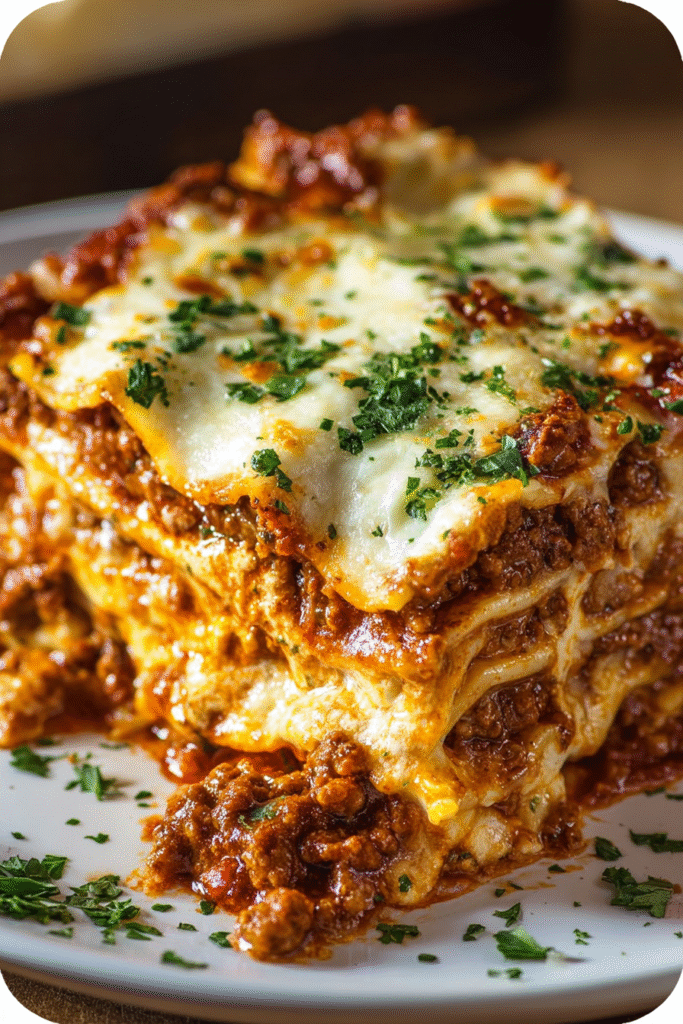
This indulgent lasagna elevates the classic comfort dish with a luxurious filling that combines cottage cheese, cream cheese, and sour cream for unparalleled creaminess and richness. Layered with seasoned Italian sausage sauce and three types of cheese, then baked until bubbling and golden, it delivers restaurant-quality depth and sophistication that justifies its prestigious name.
Why You’ll Love This Recipe
- Incredibly Creamy Filling – The triple-cheese combination of cottage cheese, cream cheese, and sour cream creates an impossibly smooth, rich layer that distinguishes this lasagna from traditional versions and provides luxurious mouthfeel in every bite.
- Complex Flavor Layers – The dual-sauce approach using both spaghetti sauce and tomato sauce, combined with Italian sausage and aromatic seasonings, builds depth and complexity that tastes like it simmered for hours despite straightforward preparation.
- Make-Ahead Friendly – Assemble completely, then refrigerate or freeze for convenient meal planning; this flexibility transforms it into an ideal option for advance preparation and stress-free entertaining.
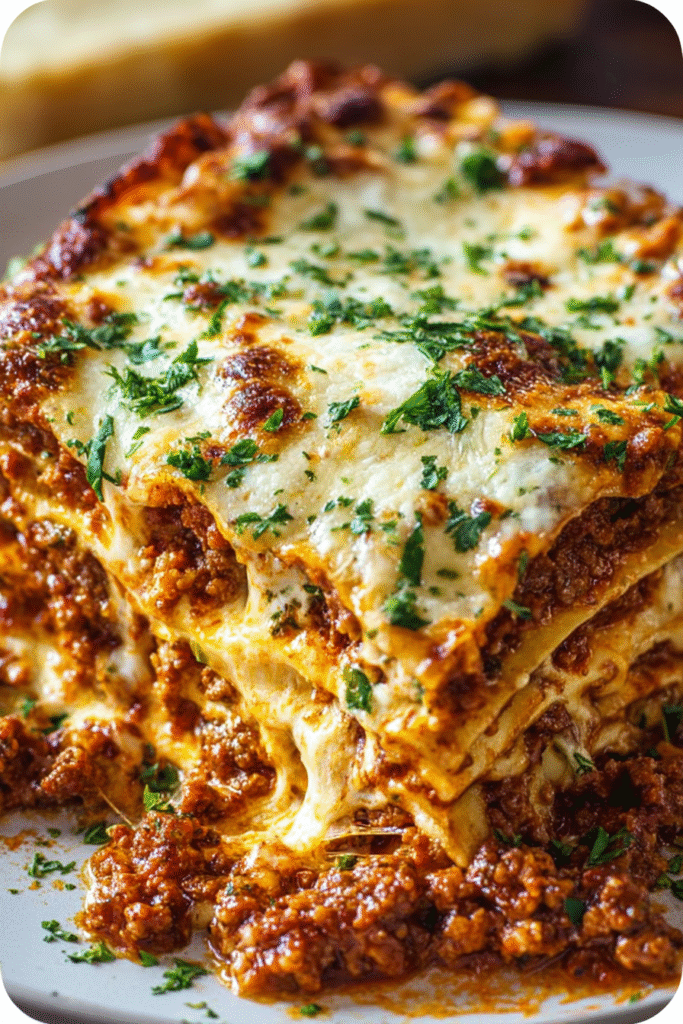
- Impressive Presentation – The golden, bubbly top with visible cheese browning looks restaurant-quality and sophisticated, making it perfect for special dinners or impressing guests without requiring advanced culinary skills.
- Feeds a Crowd – With 10 generous servings from a single 9×13-inch pan, this recipe efficiently feeds families or gatherings while maintaining portion sizes that feel substantial and satisfying.
- Perfectly Balanced Textures – The combination of tender pasta, meaty sauce, creamy filling, and melted cheese creates multiple textural contrasts that keep each bite interesting and prevent the dish from feeling one-dimensional or heavy.
Ingredients You’ll Need
For the Meat Sauce
- 1¼ pounds Italian sausage or ground beef – the protein base that provides savory richness and a slightly spiced undertone; Italian sausage adds more complexity than ground beef alone
- 1 (24-ounce) jar spaghetti sauce – the flavorful tomato foundation that coats the meat and noodles with established Italian flavors
- 2 (8-ounce) cans tomato sauce – adds concentrated tomato intensity and additional body to the sauce without overwhelming sweetness
- 1 teaspoon Italian seasoning – a blend of dried herbs that deepens the sauce’s complexity and ensures balanced herbal notes throughout
- Salt and freshly ground black pepper, to taste – essential for seasoning the meat mixture and bringing out the flavors of all components
For the Creamy Cheese Filling
- 1 (24-ounce) container cottage cheese – provides the creamy base with a mild flavor that won’t overpower other ingredients; its texture creates pockets of richness throughout the lasagna
- 1 (8-ounce) block cream cheese, softened – adds luxurious body and tangy depth that distinguishes this filling from traditional ricotta-based versions
- ¼ cup sour cream – contributes subtle tang and incredible creaminess while keeping the filling from becoming too dense or heavy
- 1 egg, beaten – acts as a binder that helps the cheese mixture hold together during baking while adding richness
- 1 tablespoon dried parsley – provides herbaceous notes and visual appeal without competing with the sauce’s dominant flavors
For Assembly and Topping
- 12 lasagna noodles – the structural framework that separates and supports the layers; provides substance and helps portions hold together cleanly
- 1 pound mozzarella cheese slices – creates the signature melted layers throughout the lasagna and forms the golden, bubbly top; slices distribute more evenly than shredded varieties
- ½ cup grated Parmesan cheese – adds sharp, umami-forward flavor and helps create a flavorful, slightly crispy top layer
Step-by-Step Instructions
Preheat and Prepare – Preheat your oven to 375°F, allowing it to reach full temperature before baking begins. This ensures even cooking and proper browning of the top layer throughout the baking time.
Cook the Pasta – Bring a large pot of salted water to a rolling boil and cook the lasagna noodles according to package directions, usually 8 to 10 minutes, stirring occasionally to prevent sticking. Drain in a colander and set aside on a clean kitchen towel to prevent them from clumping together as they cool slightly.
Brown the Sausage – Heat a 10-inch skillet over medium heat and add the Italian sausage, breaking it into small pieces with a meat masher or wooden spoon as it cooks. Continue cooking and stirring frequently for 8 to 10 minutes until the meat is completely browned with no pink remaining; drain off excess fat carefully, leaving just enough to coat the meat for flavor.
Build the Sauce – Stir the jar of spaghetti sauce, both cans of tomato sauce, and Italian seasoning into the browned sausage, combining thoroughly to distribute seasonings evenly. Reduce heat to low and simmer for 5 to 10 minutes, stirring occasionally, until the sauce thickens slightly and the flavors begin to marry; this allows the seasonings to bloom and intensifies the overall flavor profile.
Prepare the Cheese Filling – In a mixing bowl, combine the cottage cheese, softened cream cheese, sour cream, beaten egg, and dried parsley, stirring until well combined and relatively smooth. The mixture should be creamy and spreadable, though small curds from the cottage cheese are normal and desirable for texture.
Layer the Base – Lightly spray a 9×13-inch baking dish with cooking spray, then spread approximately 1 cup of the meat sauce evenly over the bottom. This prevents the noodles from sticking and ensures a layer of flavor underneath; top with 6 lasagna noodles arranged lengthwise and overlapping slightly to cover the surface completely without large gaps.
Build the First Layer – Spread half of the cottage cheese mixture evenly over the noodles, then top with a third of the mozzarella cheese slices, arranging them to cover as much surface as possible. Spoon half of the remaining meat sauce over the cheese layer and sprinkle ¼ cup of Parmesan cheese over the sauce; this creates a complete flavor and texture layer.
Build the Second Layer – Repeat the layering process by arranging the remaining 6 noodles over the Parmesan, then spreading the remaining cottage cheese mixture over them. Top with another third of the mozzarella cheese, then the remaining meat sauce, finishing with the remaining ¼ cup Parmesan cheese and final third of mozzarella cheese on top.
First Bake (Covered) – Cover the entire baking dish tightly with aluminum foil and bake at 375°F for 25 minutes. The foil traps steam, creating a gentle cooking environment that allows the layers to heat through evenly and prevents the top from browning before the interior is fully cooked.
Final Bake (Uncovered) – Carefully remove the foil and bake uncovered for an additional 30 minutes, until the cheese is golden brown and the edges are actively bubbling. You should see cheese that’s slightly browned around the edges and a center that bubbles gently when the dish is gently shaken.
Rest Before Serving – Remove from the oven and let the lasagna stand undisturbed for 15 minutes before cutting and serving. This crucial resting period allows the layers to set slightly, making portioning cleaner and allowing flavors to settle, ensuring that slices hold together attractively on the plate.
Recipe Notes & Tips
- Cream Cheese Softening – Remove cream cheese from the refrigerator 30 to 45 minutes before preparing the filling to ensure it’s soft enough to blend smoothly with other ingredients; cold cream cheese will create lumps that don’t distribute evenly throughout the filling.
- Sauce Consistency Control – The sauce should be thick enough to hold its shape but still pourable; if it seems too watery after adding both sauces, simmer for an additional 5 to 10 minutes uncovered to allow excess moisture to evaporate and concentrate flavors.
- Noodle Arrangement – Arrange noodles lengthwise across the pan rather than breaking them to fit, as this creates stronger structural support for the layers; overlapping slightly is fine and actually helps create a more cohesive structure when serving.
- Cheese Distribution Strategy – When using mozzarella slices rather than shredded cheese, slightly overlap them for complete coverage; this prevents dry spots and ensures every bite has the creamy, melted texture that makes this lasagna special.
- Advance Preparation – Assemble through Step 8 (before baking), cover tightly with foil, and refrigerate for up to 24 hours or freeze for up to 3 months; refrigerated lasagna requires only an additional 5 to 10 minutes of baking time, while frozen requires complete thawing first.
- Equipment Considerations – While a standard 9×13-inch pan works perfectly, a Baker’s Edge pan (with corner insert) ensures more evenly cooked edges and prevents over-browning; if using a ceramic dish, reduce oven temperature to 350°F to prevent over-browning on the bottom.
Nutritional Information
Prep Time: 15 minutes | Cooking Time: 55 minutes | Total Time: 1 hour 10 minutes
Servings: 10 generous servings (approximately one 3×4-inch piece per serving)
Calories per Serving: Approximately 520–560 calories (estimated based on ingredient analysis)
Estimated Nutritional Breakdown (per serving): Protein: 38–42g | Fat: 28–32g | Carbohydrates: 32–36g | Saturated Fat: 14–16g | Fiber: 2–3g | Sodium: 1,100–1,300mg | Calcium: 450–500mg | Iron: 3–4mg
Perfect Pairings
- Garlic Bread with Herbs – Warm, crispy garlic bread brushed with herb-infused olive oil provides textural contrast to the soft, creamy lasagna while offering a vehicle for soaking up remaining sauce at the bottom of the plate.
- Fresh Garden Salad – A crisp mixed green salad with light vinaigrette or lemon dressing provides bright acidity and fresh vegetables that cut through the richness of the cheese layers and aid digestion.
- Roasted Garlic Breadsticks – Italian-seasoned breadsticks or focaccia offer sophistication and allow guests to enjoy additional sauce and cheese flavors in a different format.
- Steamed or Sautéed Vegetables – Lightly seasoned spinach, green beans, or broccoli add nutritional balance and a pop of color, providing lighter counterpoint to the hearty, protein-rich main course.
Ideal Occasions
- Family Dinners and Casual Entertaining – The impressive presentation combined with straightforward, crowd-pleasing flavors makes this ideal for weeknight family meals or informal gatherings where you want something substantial without appearing effortful.
- Holiday Dinners and Special Celebrations – The luxurious creamy filling and golden appearance make this appropriate for more formal occasions; it impresses guests while being less intimidating to prepare than traditional holiday dishes.
- Potlucks and Neighborhood Gatherings – This lasagna transports easily in its baking dish, stays warm for extended periods, and appeals to broad taste preferences, making it perfect for casual community events.
- Make-Ahead Meal Prep – Assemble in advance and freeze, allowing you to reduce stress during busy seasons or create convenient freezer meals for quick weeknight dinners without sacrifice to quality or taste.
Storage & Serving Tips
- Refrigerator Storage – Allow leftovers to cool completely, then cover tightly with plastic wrap or transfer to an airtight container; refrigerate for up to 4 days, and the flavors deepen and improve as the components meld together.
- Freezer Storage – Cool completely, then cover tightly with plastic wrap followed by aluminum foil (to prevent freezer burn), or transfer to a freezer-safe container; freeze for up to 3 months; thaw completely in the refrigerator overnight before reheating.
- Reheating from Refrigerated State – Cover with foil and reheat at 350°F for 20 to 25 minutes until heated through, or microwave individual portions at 50% power for 3 to 4 minutes, stirring halfway through to ensure even warming without overcooking the edges.
- Reheating from Frozen State – Thaw completely in the refrigerator (this takes 12–24 hours depending on thickness), then follow refrigerated reheating instructions; alternatively, bake covered at 350°F for 40 to 50 minutes, checking after 35 minutes to prevent over-browning.
Creative Variations to Try
- Meat-Free Version – Substitute the Italian sausage with an equal amount of finely chopped mushrooms and walnuts sautéed until golden, combined with additional garlic and Italian seasoning; this creates a hearty, umami-rich vegetarian version.
- Turkey Sausage Alternative – Replace Italian sausage with ground turkey or turkey sausage (½ pound less than called for since turkey is leaner), which reduces fat and calories while maintaining the savory, seasoned flavor profile.
- Spicy Kick – Add ½ to 1 teaspoon of crushed red pepper flakes to the sauce or substitute hot Italian sausage for mild, creating heat that builds as you eat and adds complexity to the flavor profile.
- Vegetable-Loaded Version – Stir finely chopped spinach, diced bell peppers, or sautéed zucchini into the cheese filling or meat sauce to add nutrition, color, and subtle flavor without significantly altering cooking time or structure.
Troubleshooting Common Issues
- Lasagna Is Watery or Doesn’t Hold Together When Sliced – This occurs when there’s too much sauce or the resting period is skipped; solve by reducing sauce volume slightly in future batches, ensuring the full 15-minute rest period before serving, and using a sharp knife with gentle sawing motions.
- Top Is Overcooked or Burnt While Center Is Undercooked – The oven likely runs hotter than indicated or you’re using a thin aluminum pan; solve by checking at 20 minutes uncovered, tenting with foil if browning too quickly, or using a ceramic or thicker metal pan.
- Cheese Filling Is Lumpy or Hasn’t Blended Smoothly – This results from cold cream cheese or inadequate mixing; solve by ensuring cream cheese is fully softened before combining and mixing more thoroughly with a fork or electric mixer for 30 to 60 seconds.
- Lasagna Seems Dry or Lacks Sauce Throughout – Insufficient sauce in the meat mixture causes this; solve by increasing sauce volume slightly, stirring before layering to ensure even distribution, or drizzling a bit of tomato sauce between some layers.
Why This Recipe Works
The genius of Million Dollar Lasagna lies in its sophisticated approach to the classic dish through the creamy filling’s composition. The combination of cottage cheese, cream cheese, and sour cream creates a multidimensional creamy layer that’s impossibly rich while remaining lighter than traditional ricotta-based fillings—cottage cheese provides structure and texture, cream cheese contributes luxurious body and subtle tang, and sour cream adds creaminess without heaviness. When the beaten egg is incorporated, it acts as a binder while adding additional richness, ensuring the filling stays moist and cohesive throughout baking.
The dual-sauce approach is equally strategic: the jarred spaghetti sauce provides established Italian flavor and sweetness to balance richness, while canned tomato sauce adds concentrated tomato intensity and body that creates a more complex sauce than either alone would provide. Italian seasoning adds herbal complexity that ties the flavors together, and gentle simmering before assembly allows flavors to marry and develop depth. The layering technique—sauce, noodles, filling, cheese repeated—ensures every bite contains multiple flavor components and textures.
Baking covered for 25 minutes uses steam to gently cook the interior layers evenly, preventing the top from browning before the center reaches proper temperature. The final uncovered 30 minutes allows the cheese to develop golden-brown color and deeper, more complex flavors from the Maillard reaction while the edges bubble vigorously—visual confirmation that the dish has reached approximately 165°F throughout. The crucial 15-minute resting period allows the layers to set slightly, enabling clean slicing that maintains presentation quality. At approximately 520–560 calories per serving with over 38g of protein, this dish provides substantial nutrition while the fat content ensures satiety and satisfying richness.
Final Thoughts
Million Dollar Lasagna delivers on its promise of restaurant-quality indulgence through elegant simplicity—a carefully composed dish where each component serves a purpose in creating the ultimate comfort food experience. The triple-cheese filling elevates it above traditional lasagna while remaining accessible to home cooks, and its make-ahead nature transforms it into the perfect solution for advance preparation and stress-free entertaining. For those watching calories, you can substitute part-skim ricotta for cottage cheese (saving approximately 40 calories per serving), use part-skim mozzarella, or incorporate additional vegetables like spinach into the cheese filling to add volume without significantly increasing calories. Whether prepared for a special occasion or an impressive weeknight dinner, this lasagna proves that achieving restaurant-quality results at home requires thoughtful technique rather than complicated procedures—making it an invaluable recipe that delivers impressive results every single time.